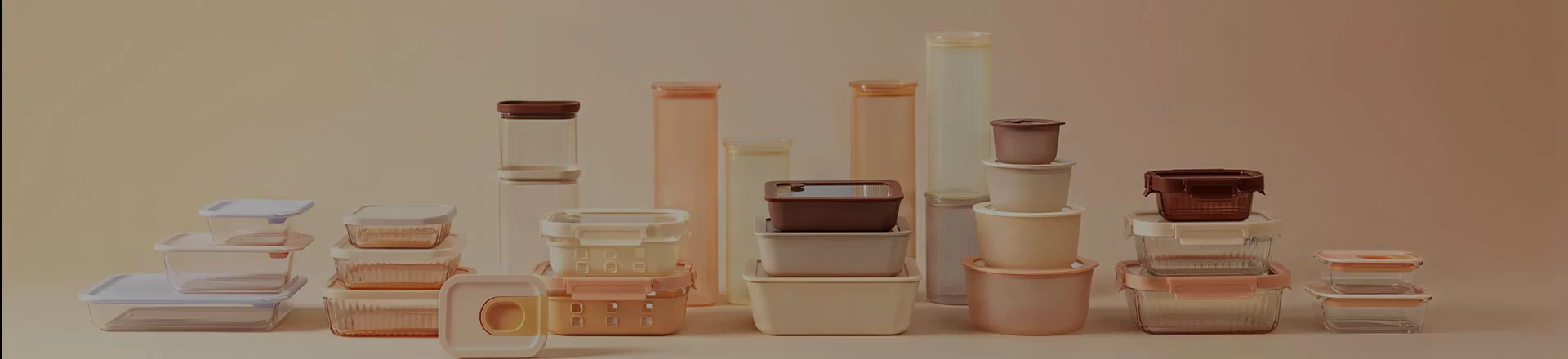
High-performance borosilicate and tempered glass solutions engineered for extreme temperature transitions and industrial-grade food preservation.
Analyzing the critical factors that determine whether glass food storage containers are freezer safe for commercial applications.
◆ In professional catering and industrial food prep, understanding if are glass food storage containers freezer safe is a matter of operational safety. Standard soda-lime glass may crack under extreme cold due to thermal expansion, whereas borosilicate glass is specifically engineered to withstand rapid temperature shifts without compromising structural integrity.
◆ To ensure that are glass food storage containers freezer safe, manufacturers focus on annealing processes and material purity. This prevents internal stresses that cause spontaneous breakage during the freezing and thawing cycles essential for bulk food storage and meal prep operations.
The convergence of material science and precision manufacturing ensures safe cold-chain storage.
Selection of low-expansion glass to minimize stress during thermal contraction.
Geometric designs that allow for volume expansion of liquids when frozen.
Rigorous industrial thermal treatment to eliminate latent internal stress.
Typical relative performance factors between different glass types in freezing environments.
Detailed parameters for the Stainless Steel Salad Spinner with Glass Storage integration.
| Parameter | Standard Specification | Material Grade | Certification | Tolerance | Application |
|---|---|---|---|---|---|
| Product Name | Stainless Steel Salad Spinner | SS 304 / Borosilicate | FDA / ISO9001 | N/A | Commercial Kitchen |
| Total Capacity | 6.7L / 226.5oz | High-Density Glass | Food Grade | ±0.1L | Bulk Prep |
| Dimensions | 17.5cm 26.3cm | Industrial Steel | Standardized | ±0.2cm | Storage Space |
| Functionality | Spinner / Strainer / Bowl | Multifunctional | User-Tested | N/A | Multi-tasking |
| Brake Mechanism | Instant Stop Button | Mechanical Spring | Safety Grade | Immediate | Operational Safety |
| Logo Option | Customized Logo | Laser Etching | OEM Standard | Precision | Brand Identity |
| Thermal Range | -20°C to 220°C | Borosilicate 3.3 | ASTM Standard | ±5°C | Freezer to Oven |
| Origin | China | Industrial Hub | Export Grade | N/A | Global Logistics |
Proven performance across diverse industries.
A facility required a solution for rapid centrifugal drying and immediate freezer storage of organic greens to prevent wilting.
Needed specialized storage that could withstand rapid temperature fluctuations during transport from prep to freezer.
Required non-reactive storage for acidic organic dressings and frozen greens to maintain purity and flavor profile.
Implemented a standardized set of salad spinners and glass containers across multiple hotel outlets for consistency.
Tailored solutions for demanding environments.
High-frequency use cases requiring rapid drying and immediate cold storage for salad components.
Bulk containment solutions that withstand sub-zero temperature gradients without fracture risks.
Packaging-ready storage that allows for precise portioning and safe freezing for consumer shipping.
Medical-grade glass standards for sterile food preparation and temperature-controlled diet delivery.
Experimental culinary use involving liquid nitrogen or rapid blast chilling of glass components.
Secure transport and storage for prefabricated salads in large-scale corporate events.
Sourcing high-purity silica and boron trioxide to ensure a homogeneous glass matrix, which is critical for freezer safety.
Utilizing computer-controlled lehrs to slowly cool glass, removing internal stresses that lead to thermal shock failure.
Each batch undergoes random sampling in extreme temperature cycling tests to verify real-world freezer reliability.
Compliance with international safety and food contact standards for global export.
Expert answers to common technical and commercial inquiries.
Yes, provided they are made from borosilicate glass. This material has a low coefficient of thermal expansion, allowing it to withstand extreme cold without cracking. Standard soda-lime glass is less reliable in freezers.
The primary cause is thermal shock. When glass cools rapidly, the exterior contracts faster than the interior, creating internal tension. Borosilicate glass minimizes this effect due to its unique chemical composition.
While borosilicate glass is highly resistant, it is best practice to allow the container to thaw slightly or use a gradual warming process to ensure maximum longevity and safety.
Look for "Borosilicate" or "Thermal Shock Resistant" certifications. Additionally, check if the supplier provides FDA or ISO 9001 documentation regarding the manufacturing process.
Yes. Liquids expand when frozen. To prevent breakage, always leave a small gap (headspace) at the top of the container to allow for the expansion of the food content.
Typical sample lead times are around 7 days, with bulk order timelines depending on volume and customization requirements. Contact our team for a specific quote.
Secure your supply chain with thermal-shock resistant glass solutions designed for extreme environments.
If you are interested in our products, you can choose to leave your information here, and we will be in touch with you shortly.


