Borosilicate Glass Food Storage Containers Cost Comparison Guide

Global housewares brand owners and wholesale importers continually balance upfront procurement expenditure against long-term operational durability when sourcing storage vessels.
Per-liter unit economics dictate initial purchasing budgets, while total cost of ownership accounts for replacement frequencies, freight optimization, and storage space utilization across complex international supply chains.
Procurement teams shifting from traditional soda-lime vessels to advanced material configurations must analyze container performance metrics across multiple thermal and mechanical environments. Standardizing on high-grade materials reduces failure rates in commercial kitchens and domestic households alike, directly influencing customer retention and warranty claim ratios.
Evaluating per-liter unit economics prevents misleading cost comparisons that overlook container lifespan. Master carton configurations and tiered pricing structures further determine whether landed costs remain viable under high-volume distribution models.
Evaluating Per-Liter Unit Economics Versus Traditional Alternative Materials
Per-Liter Cost Baselines Across Container Material Specifications
High borosilicate glass units exhibit higher initial per-liter acquisition costs than standard soda-lime alternatives, requiring wholesale importers to weigh upfront outlay against extended lifecycle durability. Material cost baselines reflect the elevated silica and boric oxide melting thresholds necessary to achieve superior thermal resilience without introducing unlisted chemical element ratios or alloy names. Wholesale purchasing budgets established at the container level must therefore incorporate these baseline cost differentials before evaluating downstream packaging and distribution expenses.
Evaluating Multi-Environment Utility Against Initial Unit Outlay
Multi-environment utility alters the initial per-liter purchasing decision by consolidating specialized single-use vessels into a single versatile SKU suitable for various commercial and domestic deployments. The capacity to transition across diverse thermal settings reduces the need for secondary SKUs, directly lowering the overall volume of distinct inventory items managed by wholesale distributors. Procurement teams analyzing initial unit economics must account for this reduction in SKU proliferation when calculating landed inventory holding costs.
| material | application | Unit Cost Baseline |
|---|---|---|
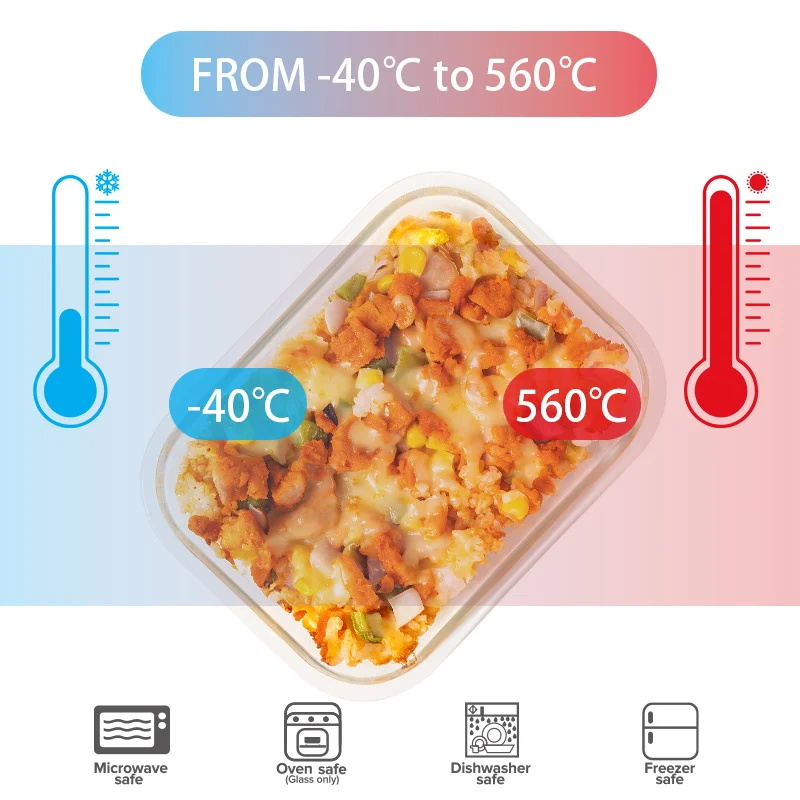
| High borosilicate glass + PP lid | Safe in microwave, oven, freezer, and dishwasher | Elevated initial per-liter cost offset by multi-environment versatility |
| Standard soda-lime alternative | microwave safe | Lower upfront baseline with restricted thermal and application scope |
Silicone Sleeve Integration and Wholesale Acquisition Impact
Silicone sleeve integration introduces an additional manufacturing assembly step that influences baseline wholesale acquisition costs for brand owners and bulk importers. Protective sleeves absorb mechanical impact forces during transit and commercial handling, protecting the underlying glass body from chipping and surface degradation. To verify compliance with structural and material parameters, procurement managers can contact the supplier to obtain the files and test reports relevant to these components.
Thermal Utility Limits and Thermal Shock Resistance Economics
Thermal Resilience and Operational Versatility
High borosilicate glass accommodates rapid temperature transitions without sustaining thermal fatigue. This wide operational window consolidates varied culinary tasks into a single vessel configuration, reducing the total variety of specialized containers required by wholesale distributors.
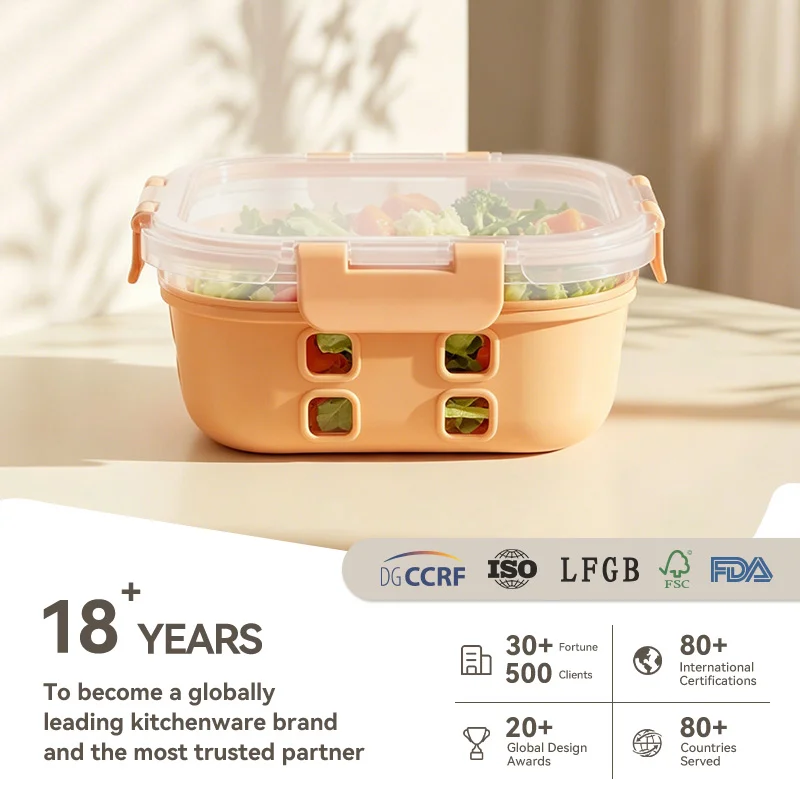
Oven safety limits up to 425 degrees provide a quantifiable performance ceiling for high-temperature roasting. Commercial operators subjecting storage vessels to aggressive thermal schedules benefit from reduced failure rates during intense cooking cycles.
Thermal Shock Resistance and Long-Term Lifecycle Costs
Broad thermal shock resistance acts as the primary mechanical driver for lower long-term replacement rates. High borosilicate glass absorbs rapid temperature gradients evenly, preventing the micro-fissuring that typically causes premature structural failure in standard glass materials.
Connecting thermal durability directly to reduced total cost of ownership clarifies the financial return on initial acquisition expenditure. Fewer discarded vessels translate to lower annualized replacement budgets across retail supply chains, protecting operational margins by minimizing breakage-driven reorders.
Total Cost of Ownership Analysis for Long-Term Wholesale Deployment
Financial Lifecycle Impact Across Distribution Channels
Total cost of ownership models demonstrate that higher upfront expenditure on resilient storage vessels yields measurable savings over extended distribution cycles. Commercial kitchens and hospitality suppliers tracking asset turnover observe fewer breakage incidents when deploying reinforced glassware compared to standard alternatives. Initial purchase price alone misleads procurement budgets if replacement intervals and freight handling losses are ignored.
Extended thermal durability directly suppresses ongoing restocking overhead by preventing premature structural failure under heavy operational loads. Logistics managers balancing asset preservation against transit friction rely on material resilience to minimize cargo degradation during cross-border shipping.
Balancing Outlay and Asset Longevity
Upfront capital allocation for premium glass bodies requires careful comparison against the recurring cost of fragile alternatives. Brand owners scaling their retail inventory must evaluate how material lifespan offsets initial invoice totals across multi-year distribution agreements.
| material | application | Cost Impact Variable |
|---|---|---|
| High borosilicate glass + PP lid | Freezer microwave & dishwasher safe | Reduced long-term replacement frequency |
| Detachable silicone sleeve component | Shock absorption and thermal protection | Minimized impact damage during transit |
Evaluating long-term financial returns involves tracking failure rates across diverse operational environments rather than focusing exclusively on initial factory quotes. Procurement schedules aligned with actual product lifecycle data prevent unnecessary capital lockup in frequent reorders.
Detachable Component Bill of Materials Cost Structure Audits
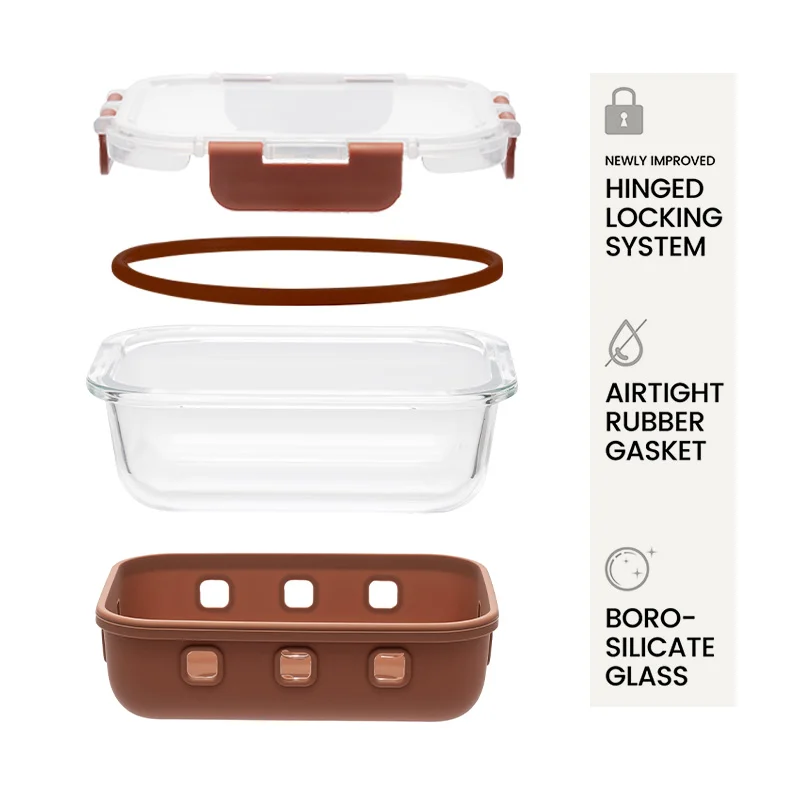
Procuring modular food storage vessels requires separating manufacturing costs across the heat-resistant glass body, PP lid, and silicone sleeve during commercial review sessions. Auditing individual component expenses prevents hidden margin inflation within assembled unit pricing by exposing raw material variances for each distinct structural element.
Manufacturing budgets shift significantly when component-level pricing is separated from final assembly quotes. Brand owners evaluating total expenditures find that modular sourcing allows targeted negotiations on plastic injection molding versus glass forming tolerances.
| Component Element | Material Composition | Cost Impact Level |
|---|---|---|
| Container Body | High borosilicate glass | High (driven by furnace energy requirements) |
| Closure Lid | PP lid | Moderate (dependent on molding scale) |
| Protective Band | Silicone sleeve | Moderate (influenced by durometer specifications) |
Targeted supplier negotiations focus on volume tiers for individual parts rather than forcing uniform price cuts across fully assembled goods. Buyers reduce landed expenditure by optimizing packaging configurations for detachable pieces during international transit.
Managing detachable components independently introduces specific inventory holding dynamics that vary depending on warehouse throughput speed and packaging scale. Replacement part availability for the closure lid or protective band directly influences long-term lifecycle expense by preventing entire unit discards due to single-part wear.
Procurement teams evaluate quotation breakdowns against material specifications available from the primary manufacturer to confirm that replacement elements match baseline production standards. Quality assurance managers must inspect technical sub-assemblies at the port of origin before final container loading.
Volume-Based B2B Procurement Models and Tiered FOB Pricing
Volume-Based Procurement Scaling Dynamics
Volume-based B2B procurement models hinge on tiered FOB pricing that directly reduces per-unit costs as aggregate order quantities rise. Importers forecasting high annual wholesale distribution volume secure preferential per-liter pricing tiers, shifting baseline margins significantly. This volume leverage depends entirely on the buyer's exact container load thresholds and destination port logistics costs.
Purchasing agents must balance volume discounts against rising inventory holding costs when planning large-scale shipments. Overstocking storage vessels ties up working capital, offsetting the initial financial gains achieved through lower FOB tiers.
| Order Volume Tier | Pricing Mechanism | Logistics Impact | Holding Cost Implication |
|---|---|---|---|
| Standard Batch | Baseline FOB rate | Standard pallet space utilization | Minimal capital lockup |
| Volume Commitment | Tiered discount structure | Optimized master carton consolidation | Requires warehouse capacity planning |
Master Carton Configuration and Logistics Efficiency
Master carton set configurations dictate how physical container load thresholds translate into measurable ocean freight savings. Packing high borosilicate glass bodies alongside detachable lids and protective silicone sleeves requires precise dimensional calculations to maximize shipping container space.
Efficient carton design prevents wasted volumetric space during international transit, directly lowering landed costs per unit. Importers align these spatial requirements with destination warehouse capacities to prevent bottlenecked receiving docks and excessive demurrage fees.
Landed Cost Optimization Strategies for Global Supply Chain Managers
Unified Landed Cost Modeling and Volume Integration
Synthesizing per-liter unit economics, component audits, and tiered FOB pricing into a unified landed cost model requires calculating the precise financial impact of master carton set configurations and freight tariffs. Total landed expense reflects container load thresholds, palletization density, and destination port fees rather than simple factory gate quotes. Procurement teams evaluating international shipments must factor in container volume optimizations to prevent inefficient empty space utilization that artificially inflates per-unit ocean freight charges.
Aligning purchasing volume with internal inventory holding costs prevents overstocking while securing preferential tiered pricing. Global housewares brand owners balance holding expenses against bulk discount savings by analyzing annual consumption forecasts across distinct wholesale distribution channels. Landed cost efficiency improves when shipping volume aligns with container load thresholds, ensuring that logistics expenditure scales proportionally with inventory turnover rates.
Compliance Verification Protocols and Contract Negotiations
Verifying supplier compliance without relying on unlisted certifications involves directly auditing laboratory test reports and material specification dossiers provided by the manufacturing source. Procurement teams inspect documentation covering food-contact migration limits and thermal performance parameters for the borosilicate glass body, PP lid, and silicone sleeve. This verification workflow replaces speculative claims with verifiable data, protecting importing entities from regulatory detention and warranty liabilities.
Preparing for final supplier cost reviews and volume contract negotiations requires cross-referencing component cost structures against projected annual order quantities. Buyers examine detachable part pricing, master carton dimensions, and tiered FOB schedules during contract talks to identify margin optimization opportunities. Successful negotiations depend on transparent component audits and clearly defined delivery terms that vary according to destination port requirements and seasonal shipping demand.
Frequently Asked Questions
Operating safely up to 425 degrees minimizes catastrophic thermal failure during high-heat domestic baking and commercial food preparation. Lower thermal degradation directly translates into fewer warranty claims and reduced replacement frequencies for retail brand owners. Financial savings accumulate across the distribution lifecycle.
Exceptional thermal shock resistance prevents cracking when moving rapidly between freezing environments and heated ovens. This material stability eliminates the premature product failures typically associated with lower-grade thermal vessels. Wholesale buyers factor this durability metric directly into projected replacement revenue models.
Cost audits require separating the borosilicate glass body, PP lid, and silicone sleeve during initial supplier quotation reviews. Analyzing component expenses independently reveals margin optimization opportunities before finalizing master carton quantities. Final cost distribution depends heavily on component sourcing tier and assembly complexity.
Tiered FOB pricing structures reward higher volume commitments with reduced per-unit acquisition costs, directly influencing warehouse cash flow management. Importers must align master carton set thresholds with internal inventory holding costs to prevent excess stock accumulation. Volume discount brackets are negotiated directly based on projected annual distribution targets.
Procurement teams request official documentation files directly from suppliers to validate material composition and safety parameters. Verification focuses on checking that specifications match operational boundaries rather than relying on unverified compliance assertions. Final compliance validation depends on the specific documentation versions provided by the vendor.
Conclusion
Precise landed cost calculations depend on evaluating order volume thresholds alongside destination port logistics parameters. Wholesale buyers must weigh maritime freight tariffs and local handling fees against tiered quantity discounts when planning inventory replenishment.
Procurement teams finalizing wholesale purchase agreements require itemized financial audits covering every production stage. Total landed expenditure relies strictly on the variable interplay between master carton dimensions, minimum batch quantities, and international transport distances.