
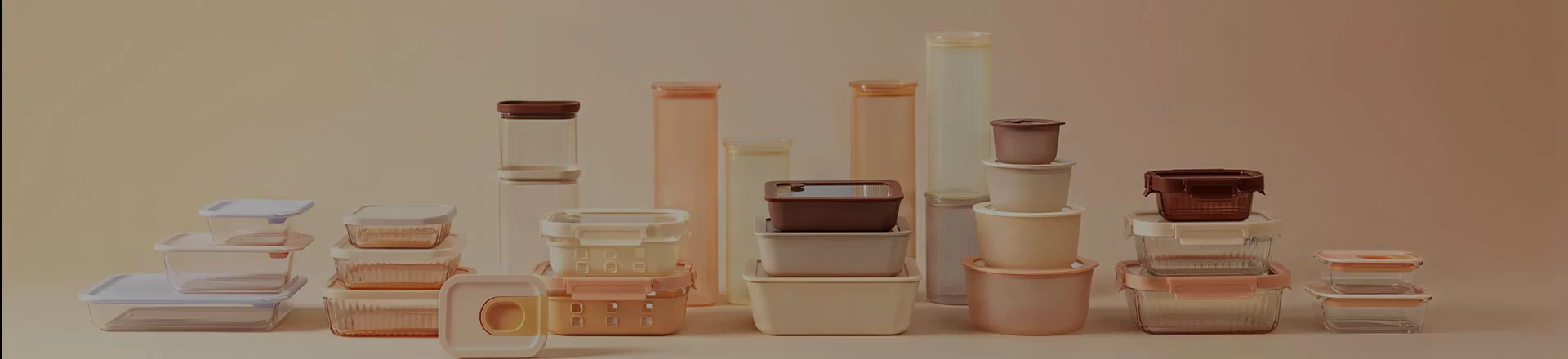

High-performance kitchenware requires a precise balance of thermal stability, material purity, and functional design. For professional food service and retail sectors, identifying the right custom glass bakeware with lids involves understanding how material science affects food preservation and cooking safety. This guide examines the technical requirements of borosilicate glass and the commercial considerations for scaling product lines.
The transition from standard soda-lime glass to high borosilicate glass addresses the critical issue of thermal shock. In commercial environments, where containers move rapidly from freezers to ovens, material failure can lead to significant safety risks and financial loss. By integrating specialized lids and protective elements, manufacturers can create versatile systems that serve both as cooking vessels and airtight storage solutions.
Readers will explore the specific criteria for evaluating glass durability, the role of BPA-free polymers in sealing, and the logistical advantages of nestable designs. Furthermore, we will analyze how strategic customization and international certifications like FDA and LFGB ensure that high-volume procurement meets global safety standards and brand identity requirements.
The Engineering of Borosilicate Glass Bakeware
Unlike common glass, borosilicate glass is engineered by incorporating boron trioxide, which significantly lowers the coefficient of thermal expansion. This chemical composition allows the glassware to withstand extreme temperature fluctuations without cracking, making it indispensable for oven-to-table applications. From a manufacturing perspective, the stability of this material ensures that the glass remains non-reactive, preventing the leaching of chemicals into acidic or alkaline foods, which is a primary concern for health-conscious consumers and regulatory bodies.
Strategic Selection for Commercial Glassware
When procurement managers evaluate glass storage systems, the focus must shift from basic aesthetics to a multi-dimensional analysis of performance, safety, and operational efficiency. The following seven dimensions provide a framework for professional selection.
Thermal Resistance and Safety
The core value of premium bakeware lies in its ability to handle heat. High borosilicate options are typically safe for ovens up to 425 degrees Fahrenheit. This resilience is critical for professional meal prep and commercial baking. When evaluating specifications, buyers should verify the specific temperature limits for both the glass body and any integrated silicone components to ensure safety during high-heat cycles.
| Component | Material | Heat Limit | Key Safety Feature |
|---|---|---|---|
| Glass Body | Borosilicate | Up to 425°F | Low Thermal Expansion |
| Lid | PP/PE | Freezer/Fridge | BPA-Free Composition |
| Sleeve | Silicone | Up to 425°F | Heat Insulation |
| Seal Ring | Food-Grade Silicone | Moderate | Airtight Leak-proofing |
| Base | Tempered Glass | High | Impact Resistance |
| Outer Rim | Polished Borosilicate | High | Smooth Edge Safety |
Lid Material Compatibility
The lid is as critical as the vessel for food preservation. Polypropylene (PP) and Polyethylene (PE) are preferred for their durability and chemical stability. For commercial use, a leak-proof seal ring is mandatory to prevent oxygen ingress and moisture loss. It is essential to ensure lids are removed before microwave or oven use, as polymers have significantly lower melting points than borosilicate glass.
Volume Distribution and Utility
Effective product sets utilize "smart capacity distribution" to cover diverse food types. For example, a combination of 230ml for condiments, 560ml for side portions, and 1940ml for bulk soups or main courses optimizes kitchen space. This tiered approach ensures that users do not use oversized containers for small portions, which reduces food oxidation and maximizes refrigeration efficiency.
Storage Efficiency and Design
In B2B logistics and consumer kitchens, space is a premium. "Stackable" and "Nestable" designs are not mere conveniences but operational requirements. Stackable designs allow for organized vertical storage in freezers, while nestable designs reduce the volume required for shipping and warehousing, directly lowering the carbon footprint and logistics costs associated with distribution.
Hygiene and Long-term Storage
Glass is superior to plastic for long-term storage because it is non-porous. Borosilicate glass does not absorb odors, leach chemicals, or stain when in contact with tomato-based sauces or oily foods. This ensures that the flavor profile of the food remains untainted, a critical factor for high-end catering and health-focused retail brands.
Customization and Brand Integration
For companies looking to establish market presence, OEM and ODM services allow for the integration of private logos and custom color-matching for silicone sleeves and lids. IKOO GLASS leverages its R&D capabilities to offer these customizations, enabling partners to align the product's visual identity with their overall brand strategy while maintaining industrial-grade quality.
Compliance and Quality Audits
Global distribution requires adherence to strict certifications. Compliance with ISO9001, FDA, LFGB, and BSCI ensures that products meet safety and ethical manufacturing standards. For high-volume buyers, such as Fortune Global 500 retailers, these certifications are non-negotiable prerequisites to mitigate legal risks and ensure consumer safety across different international markets.
FAQ
What makes borosilicate glass better than regular glass for bakeware?
Borosilicate glass contains boron trioxide, which gives it a much lower coefficient of thermal expansion. This means it can withstand rapid temperature changes—such as moving from a freezer to a preheated oven—without shattering, whereas regular soda-lime glass is highly prone to thermal shock.
Can these glass containers be used in the oven with the lids on?
No, the lids made of PE or PP materials are not oven-safe and will melt at high temperatures. The borosilicate glass body and silicone sleeves are safe for oven use up to 425°F, but lids must always be removed before heating in an oven or microwave.
How do I ensure the containers are leak-proof for commercial transport?
Look for containers that feature a color-matching silicone seal ring and snap-lock lids. This combination creates an airtight environment that prevents liquid leakage and maintains food freshness, which is essential for delivery services and long-term storage.
What is the typical MOQ for customized glass food containers?
While it varies by supplier, IKOO GLASS typically sets a minimum order quantity (MOQ) of 3,000 pieces for customized orders. This allows for the efficient setup of production lines for private logo printing and custom material specifications.
Are these glass containers suitable for long-term food storage?
Yes, they are ideal for long-term storage. Borosilicate glass is non-porous, meaning it does not absorb smells or leach chemicals into food. Combined with airtight lids, these containers protect food from contamination and oxidation better than plastic alternatives.
Which certifications should I verify before importing glass bakeware?
For the US market, FDA certification is essential. For Europe, LFGB and DGCCRF are key. Additionally, ISO9001 ensures quality management, and BSCI certification verifies that the manufacturer adheres to social and ethical labor standards.
References and further reading
- International Standard ISO 9001: Quality Management Systems Requirements.
- FDA Food Contact Substance (FCS) Compliance Guidelines for Glassware.
- European Union LFGB Standards for Food-Contact Materials.


