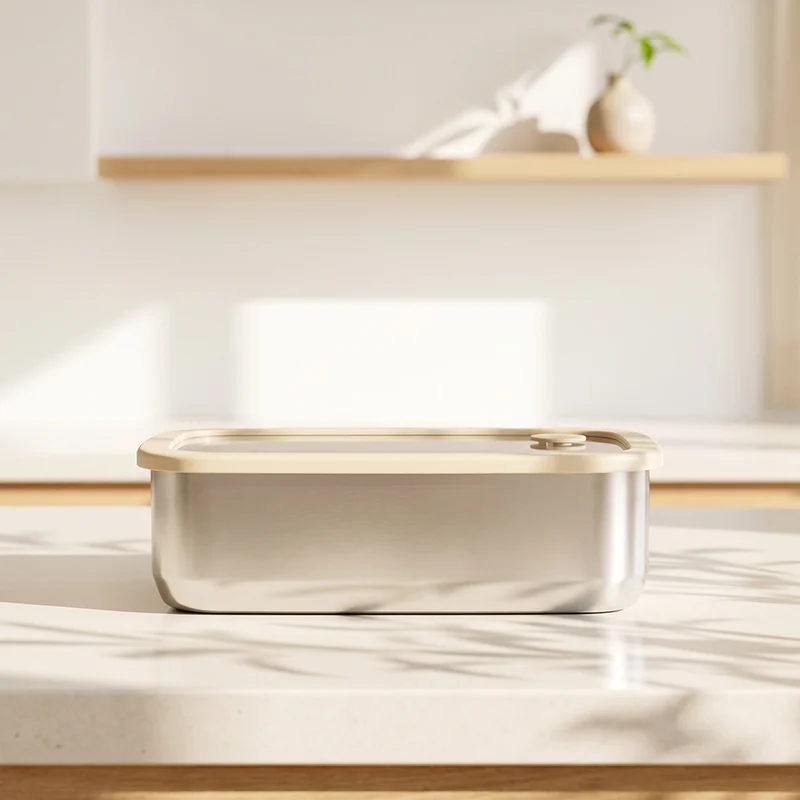
A stainless steel rectangular storage container offers a practical solution for storing, organizing, and transporting food, ingredients, and other materials in commercial and household environments. Its space-efficient shape, durable construction, and easy-to-clean surface make it a popular choice for food processing facilities, restaurants, catering businesses, and professional kitchens.
Compared with many plastic or glass alternatives, stainless steel containers can provide excellent durability and long-term value when the material grade and construction suit the intended application. For businesses purchasing storage equipment in bulk, choosing the right size, material, and design can improve workflow efficiency and help control replacement costs.
This guide explores the main benefits, applications, material options, and purchasing considerations for rectangular stainless steel storage containers.
1. Why Choose a Stainless Steel Rectangular Storage Container?
The rectangular design makes efficient use of available storage space. Containers can be arranged side by side on shelves, placed inside refrigerators, or organized on workstations with less wasted space than many round alternatives.
Stainless steel also offers several practical advantages:
Durability: It resists cracking and breaking under normal handling better than many fragile materials.
Corrosion resistance: Suitable stainless steel grades help withstand moisture and routine cleaning.
Easy maintenance: Smooth, well-finished surfaces are generally easy to wash and maintain.
Space efficiency: Straight sides make stacking, arranging, and organizing easier.
Long service life: Proper material selection and maintenance can reduce the need for frequent replacement.
For commercial buyers, these features are particularly valuable in environments where containers are used repeatedly throughout the day. However, performance depends on the stainless steel grade, wall thickness, surface finish, and manufacturing quality.
2. Common Applications of Rectangular Stainless Steel Containers
A rectangular stainless steel storage container can serve different purposes depending on its dimensions, depth, and accessories.
Commercial kitchens and restaurants: Chefs use these containers to organize prepared ingredients, store food portions, and keep workstations orderly. Compatible lids can help protect contents during refrigerated storage.
Food processing facilities: Manufacturers use stainless steel containers for holding ingredients, collecting prepared materials, and supporting internal production workflows. The container design should match the facility's hygiene requirements and cleaning procedures.
Catering and food preparation: Rectangular containers are useful for batch preparation, portion control, and transporting ingredients between work areas. Appropriate covers and handling arrangements can help reduce contamination risks.
Pantries and household kitchens: Smaller containers help organize dry goods, meal-prep ingredients, and frequently used kitchen supplies.
Industrial and laboratory environments: Certain containers can hold components, tools, or nonhazardous materials. Buyers should verify chemical compatibility and applicable industry requirements before selecting a container for specialized use.
When choosing a container, consider its intended contents, operating temperature, cleaning frequency, and whether it needs to support transportation or stationary storage.
3. Which Stainless Steel Grade Is Best for Storage Containers?
Material grade is an important purchasing consideration because it affects corrosion resistance, durability, and suitability for different environments.
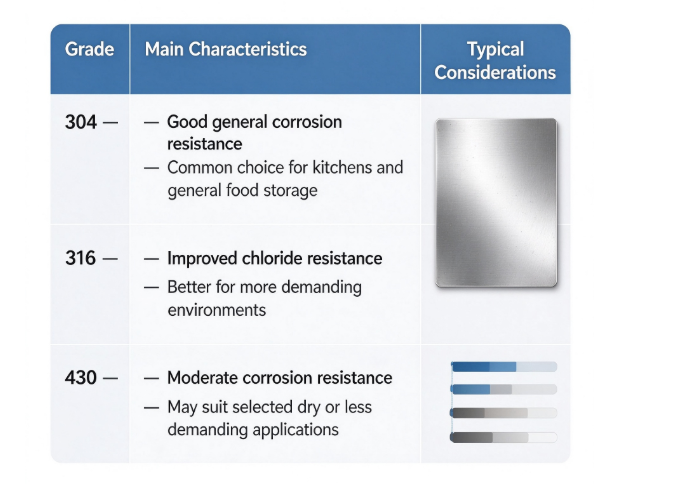
| Stainless steel grade | Main characteristics | Typical considerations |
|---|---|---|
| 304 stainless steel | Good general corrosion resistance and widely used in food-related equipment | A common choice for kitchens and general food storage |
| 316 stainless steel | Improved resistance to chlorides and certain corrosive environments | Worth considering for more demanding applications |
| 430 stainless steel | Magnetic ferritic stainless steel with moderate corrosion resistance | May suit selected dry or less demanding applications |
For many food storage applications, 304 stainless steel is a practical starting point. Grade 316 may be preferable when exposure to salts or more aggressive cleaning environments creates additional corrosion concerns. Neither grade is universally suitable for every chemical or operating condition.
Buyers should confirm the actual material grade, product specifications, and relevant food-contact compliance documentation with the manufacturer. Do not assume that every stainless steel container is automatically suitable for all food types or industrial environments.
4. How to Select the Right Size and Capacity
Choosing the correct capacity helps prevent wasted storage space and improves handling efficiency. A container that is too small may require repeated transfers, while an oversized model can take up valuable shelf space.
Before ordering, evaluate these factors:
Length and width: Measure shelves, refrigerators, worktables, and other storage areas.
Depth: Shallow containers are convenient for ingredients and quick access, while deeper models may suit bulk storage.
Capacity: Estimate the volume or weight of the materials being stored.
Wall thickness: Consider the expected load, handling frequency, and required rigidity.
Stackability: Check whether the design supports stable stacking and easy separation.
Lid compatibility: Confirm that lids fit securely and meet the intended storage requirements.
For bulk procurement, request dimension drawings and capacity specifications before approving a purchase. Confirm whether the stated dimensions refer to the outside or inside of the container, especially when the product must fit into existing equipment.
5. Stainless Steel Container with Lid: What Should Buyers Consider?
A stainless steel container with lid provides an additional layer of protection against dust, splashes, and incidental contact. It can also help keep stored ingredients organized during refrigeration and handling.
However, not every lid provides an airtight or leakproof seal. Buyers should distinguish between a simple protective cover, a fitted lid, and a container designed with a dedicated sealing mechanism.
When evaluating lid options, consider:
Fit and ease of removal
Compatibility with repeated washing
Resistance to warping under intended conditions
Availability of replacement lids
Whether a gasket or locking mechanism is required
Suitability for refrigerated storage or transportation
If moisture control, odor containment, or spill prevention is important, ask the supplier to specify the sealing performance rather than relying on general product descriptions.
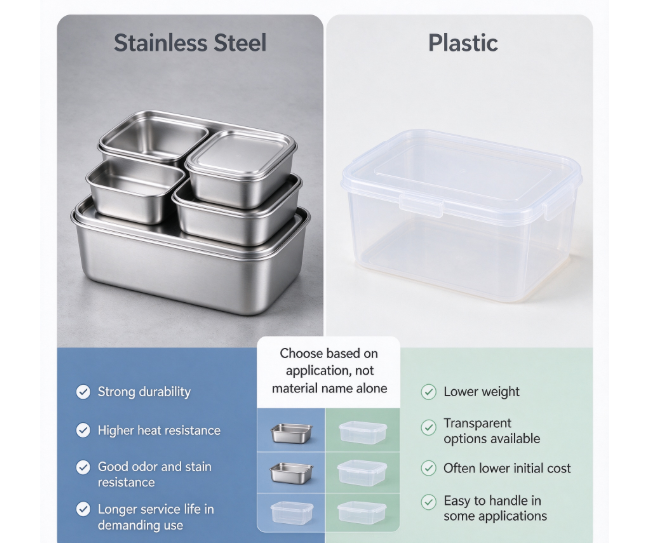
6. Stainless Steel vs. Plastic Storage Containers
Both stainless steel and plastic containers have useful applications. The better option depends on the storage environment, budget, handling requirements, and expected service life.
| Comparison factor | Stainless steel | Plastic |
|---|---|---|
| Durability | Generally resistant to cracking and repeated use | Varies by polymer and wall thickness |
| Heat resistance | Depends on grade and construction; often suitable for higher temperatures than common plastics | Depends on the specific polymer |
| Weight | Usually heavier | Usually lighter |
| Odor and stain resistance | Generally good with appropriate cleaning | Some plastics may retain stains or odors |
| Visibility | Usually opaque | Transparent options are available |
| Initial cost | Often higher | Often lower |
For professional kitchens and demanding reusable storage applications, stainless steel may offer long-term advantages. Plastic may be more suitable when low weight, transparency, or a lower initial purchase price is the priority.
Before using either material with food, verify the product's intended application and applicable food-contact requirements. Also check whether the container is approved for dishwashers, freezers, ovens, or other equipment rather than assuming compatibility.
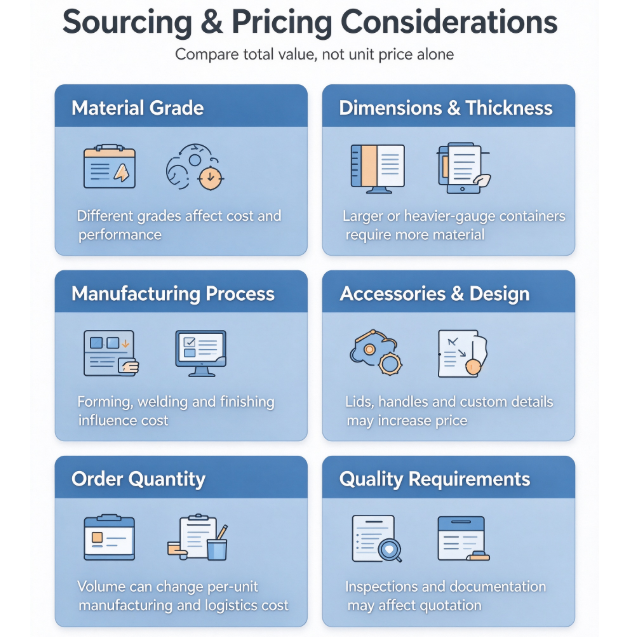
7. What Affects the Price of Stainless Steel Rectangular Storage Containers?
The price of a stainless steel rectangular storage container depends on several manufacturing and purchasing factors.
Material grade: Different grades have different raw material costs and performance characteristics.
Dimensions and thickness: Larger containers and heavier-gauge construction generally require more material.
Manufacturing process: Forming, welding, polishing, edge finishing, and quality inspection can influence production costs.
Accessories and design: Lids, handles, reinforced corners, special finishes, and custom dimensions may increase the unit price.
Order quantity: Larger orders may reduce per-unit manufacturing and logistics costs, depending on production efficiency and packaging requirements.
Quality requirements: Additional inspections, documentation, or application-specific compliance requirements may affect the total quotation.
For an accurate price comparison, provide suppliers with the required dimensions, grade, thickness, finish, accessories, quantity, and destination. Comparing quotations against the same specifications helps avoid choosing a low-priced product that does not meet operational needs.
8. Why Source Stainless Steel Rectangular Storage Containers from a Manufacturer?
Working directly with a qualified manufacturer can help commercial buyers clarify specifications, evaluate production consistency, and discuss repeat-order requirements.
For importers, distributors, catering equipment suppliers, and food service businesses, important supplier evaluation criteria include material traceability, dimensional consistency, surface quality, packaging, lead time, and export experience.
If standard models do not meet your needs, ask whether the manufacturer offers custom dimensions, alternative depths, specific surface finishes, compatible lids, or branded packaging. Before placing a large order, request samples or a pre-production approval where practical.
A reliable sourcing process should also confirm minimum order quantity (MOQ), production lead time, payment terms, shipping arrangements, and inspection procedures.
Frequently Asked Questions about stainless steel storage containers
Is a stainless steel rectangular storage container suitable for food storage?
Yes, when the container uses an appropriate food-contact material and meets the requirements of the intended application. Verify the stainless steel grade, surface condition, and relevant compliance documentation.
Is 304 stainless steel better than 316 for storage containers?
Grade 304 is suitable for many general-purpose applications. Grade 316 offers better resistance to certain corrosive environments, including those involving chlorides. The best choice depends on the materials stored and the cleaning conditions.
Can stainless steel rectangular containers be stacked?
Many models are designed for nesting or stacking, but the features vary. Check the container geometry, load limits, and stability before stacking filled containers.
Can I order custom stainless steel storage containers in bulk?
Many manufacturers offer customization depending on production capabilities and order quantity. Confirm available dimensions, material grades, thicknesses, lid designs, MOQ, and delivery schedules before ordering.
Conclusion
A stainless steel rectangular storage container can improve organization, durability, and storage efficiency across commercial kitchens, food processing facilities, catering operations, and other professional environments. Selecting the right material grade, capacity, thickness, finish, and lid design is essential to achieving reliable performance.
For bulk buyers, comparing complete specifications and evaluating the manufacturer's quality controls can help reduce procurement risks and improve long-term value. Whether you need standard food storage containers or custom rectangular stainless steel containers, define your application requirements first and request a detailed quotation based on your expected order volume.