The shift toward sustainable food preservation has placed a renewed spotlight on high-performance containment materials. For commercial distributors and kitchenware retailers, the ability to maintain food freshness while minimizing plastic waste is no longer a niche requirement but a primary market driver.
Achieving a true airtight environment requires a precise synergy between the container body and the sealing mechanism. While various materials are available, high borosilicate glass remains the gold standard due to its non-reactive nature and thermal resilience, especially when paired with advanced vacuum-sealing technology.
Understanding the technical nuances of wholesale glass vacuum seal containers is essential for procurement managers aiming to optimize inventory for the modern, eco-conscious consumer.


Vacuum sealing in glassware operates by removing a significant portion of air from the container's interior before sealing the lid. This process reduces the oxygen available for aerobic bacteria and oxidation, which are the primary drivers of food spoilage and nutrient degradation.
In a wholesale context, the reliability of this seal depends on the tolerances of the glass rim and the elasticity of the sealing gasket. If the rim is uneven, the vacuum pressure will eventually cause air leakage, rendering the preservation effort ineffective.
The structural integrity of a vacuum container is determined by its ability to withstand atmospheric pressure without deformation or failure. For glass, this means focusing on wall thickness and the purity of the material. High-grade borosilicate glass is preferred because it handles pressure differentials more effectively than standard glass, reducing the risk of implosion under high vacuum levels.
Beyond the glass, the lid assembly is critical. Most professional-grade containers utilize BPA-free PP (Polypropylene) combined with silicone gaskets. The locking mechanism—often seen in 4-lock or cool-lock designs—must apply uniform downward pressure across the entire circumference of the lid to maintain a consistent seal.
Certification standards such as FDA and ISO9001 ensure that the materials used are food-safe and that the manufacturing process is consistent. For large-scale buyers, these certifications are the first line of defense against quality variance in bulk shipments.
Selecting the right glass type is a fundamental decision for any wholesaler. While soda-lime glass is cost-effective, it is prone to thermal shock and possesses a higher coefficient of expansion, making it less suitable for containers that move between freezers and ovens.
Borosilicate glass is the essential choice for vacuum storage due to its superior acid and alkali resistance, and its ability to withstand extreme temperature fluctuations without cracking, ensuring the vacuum seal remains intact through various thermal cycles.
This material stability is what allows a container to be "oven-safe" and "freezer-safe" simultaneously. When a user transfers a vacuum-sealed container from a freezer to a microwave, the borosilicate structure prevents micro-fractures that would otherwise compromise the airtight seal.
The effectiveness of various storage methods can be quantified by looking at their relative ability to maintain freshness across different food categories. Vacuum-sealed glass typically outperforms standard airtight containers by significantly slowing down the rate of moisture loss and oxidation.
When evaluating wholesale options, buyers should look at a "Preservation Index" which considers the seal's longevity, the material's permeability, and the ease of maintaining the vacuum over time.
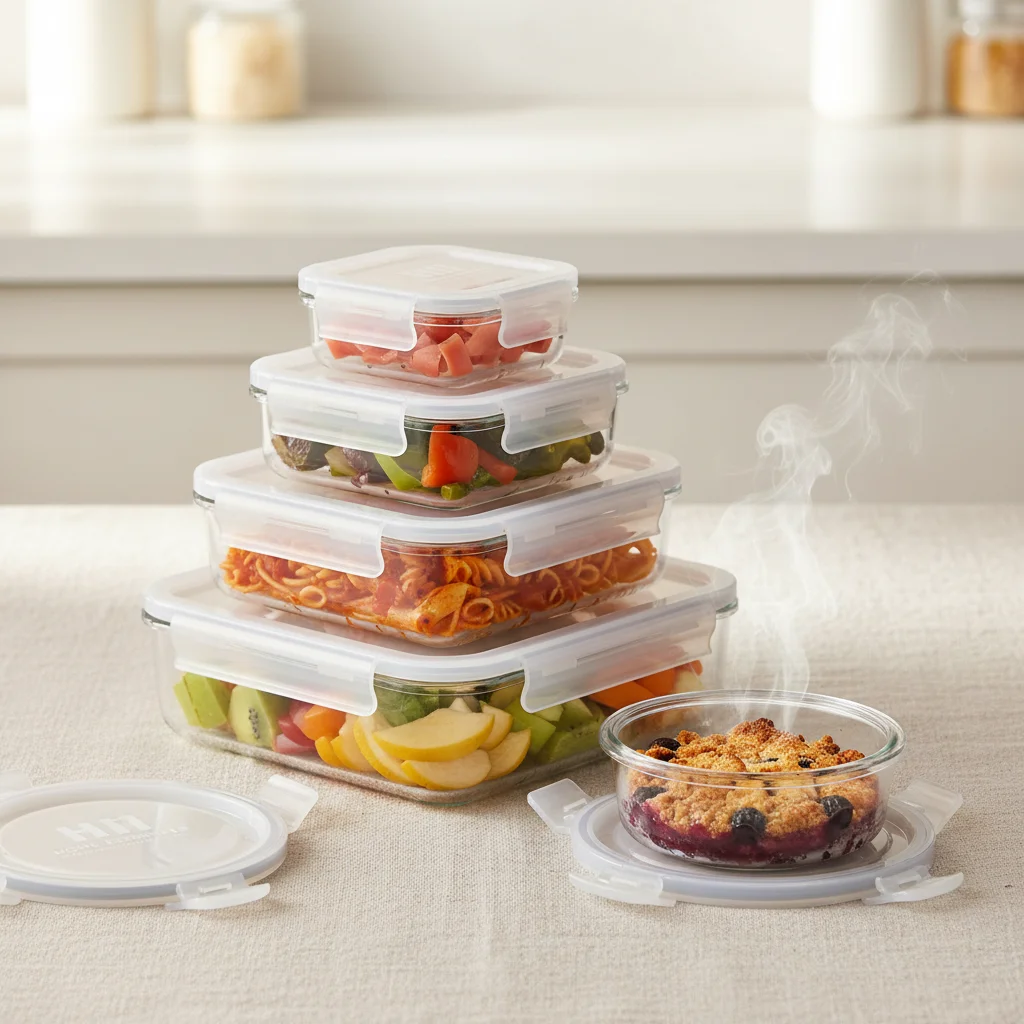
In a typical industrial meal prep setting, the demand for wholesale glass vacuum seal containers is driven by the need for "Freshness Preservation." Commercial kitchens utilize these containers to extend the shelf life of prepped ingredients, reducing food waste and improving operational efficiency.
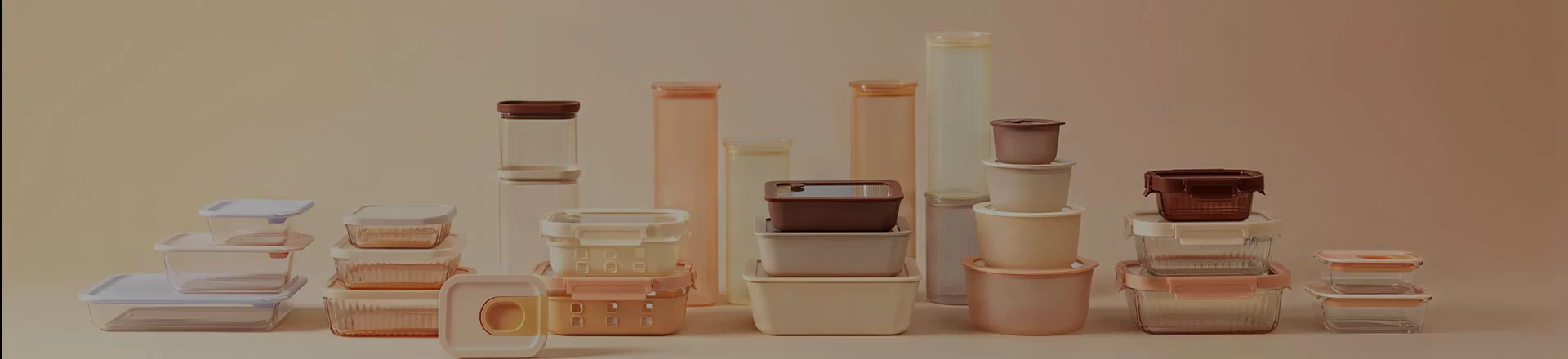
For retailers, the focus is on the versatility of the product range. Offering a mix of round, square, and rectangular shapes allows consumers to optimize their refrigerator space. Additionally, integrating dividers into glass containers caters to the growing "meal prep" trend, providing a comprehensive solution for health-conscious users.
The lid is the most technologically active component of any vacuum container. Early designs relied on simple friction fits, which were prone to leaking. Modern iterations have evolved into complex locking systems, such as the "4 Lock" or "Cool Lock" mechanisms, which ensure that the silicone gasket is compressed evenly.
Material science has also played a role. The move toward BPA-free PP for lids ensures that no harmful chemicals leach into the food, even when subjected to temperature changes. This is particularly important for products targeting the health-food market.
The latest trend involves integrating valve systems that allow for the removal of air without needing external machinery, making vacuum storage more accessible to the average home user while maintaining the professional standards required for wholesale distribution.
When sourcing containers in bulk, buyers must balance cost, durability, and functional performance. A common mistake is prioritizing the lowest unit price over the quality of the seal or the grade of the glass. A failure rate of even 2% in a shipment of 10,000 units can lead to significant customer dissatisfaction and returns.
A robust evaluation framework should include a check for "thermal shock resistance" and "seal longevity." Suppliers who offer OEM/ODM support allow wholesalers to tailor the product—such as adding custom dividers or choosing specific colors—to fit their brand positioning.
The following comparison provides a relative assessment of different containment strategies based on typical commercial requirements.
| Factor | Standard Glass | Borosilicate Glass | Stainless Steel 304 | Plastic (BPA-Free) |
|---|---|---|---|---|
| Thermal Shock | Low | Very High | High | Moderate |
| Oxidation Block | Moderate | High (Vacuum) | High (Vacuum) | Low |
| Reactivity | None | None | Low | Moderate |
| Durability | Fragile | Moderate | Very High | High |
| Transparency | Clear | Clear | Opaque | Translucent |
| Eco-Impact | Recyclable | Recyclable | Recyclable | Limited |
A professional-grade container is defined by the use of high borosilicate glass, which resists thermal shock and chemical corrosion, paired with a BPA-free PP lid and a high-elasticity silicone gasket. The key is the ability to maintain a consistent internal pressure differential (vacuum) without leakage, which is typically achieved through multi-point locking mechanisms that ensure uniform compression of the seal.
Yes, provided they are made from borosilicate glass. Unlike soda-lime glass, borosilicate has a very low coefficient of thermal expansion, meaning it won't crack when moving between extreme temperatures. However, it is critical to remove the lid before placing the container in a conventional oven, as the PP plastic lids are not designed for high-heat oven environments, though they are typically freezer-safe.
Wholesalers should perform a "pressure drop test" or a "submersion test" on samples. A quality seal should show no air bubbles when the sealed container is submerged in water under slight pressure. Additionally, checking the consistency of the glass rim for smoothness and the gasket for a seamless fit is essential to ensure a low failure rate across large bulk orders.
The primary advantage is transparency and non-reactivity. Glass allows users to identify contents without opening the seal, which prevents unnecessary air exposure. Furthermore, glass is completely inert, meaning it will not react with acidic foods (like tomato sauce or citrus), whereas some lower-grade stainless steels may experience pitting or react over very long periods of storage.
The main limitation is fragility; while borosilicate is strong, it can still break upon high-impact drops. Additionally, vacuum sealing is most effective for preventing oxidation but does not completely stop all forms of anaerobic bacterial growth. Therefore, while it extends shelf life significantly, it is a preservation aid rather than a permanent sterilization method like canning.
OEM/ODM services allow wholesalers to differentiate their product line in a crowded market. Instead of selling generic containers, they can request specific customizations—such as customized lid colors, specific volume capacities, or the addition of glass dividers—to meet the exact needs of their target demographic, thereby increasing the perceived value and brand loyalty of their offering.
The demand for high-performance food storage is evolving toward a preference for materials that are both sustainable and technically superior. Borosilicate glass, when integrated with precise vacuum-sealing technology, offers a professional solution that balances health, longevity, and environmental responsibility.
For those navigating the wholesale glass vacuum seal containers market, the focus must remain on material purity and seal integrity. By prioritizing certified manufacturing standards and engineering precision, distributors can provide products that truly enhance food preservation and meet the rigorous demands of the global kitchenware market.

If you are interested in our products, you can choose to leave your information here, and we will be in touch with you shortly.