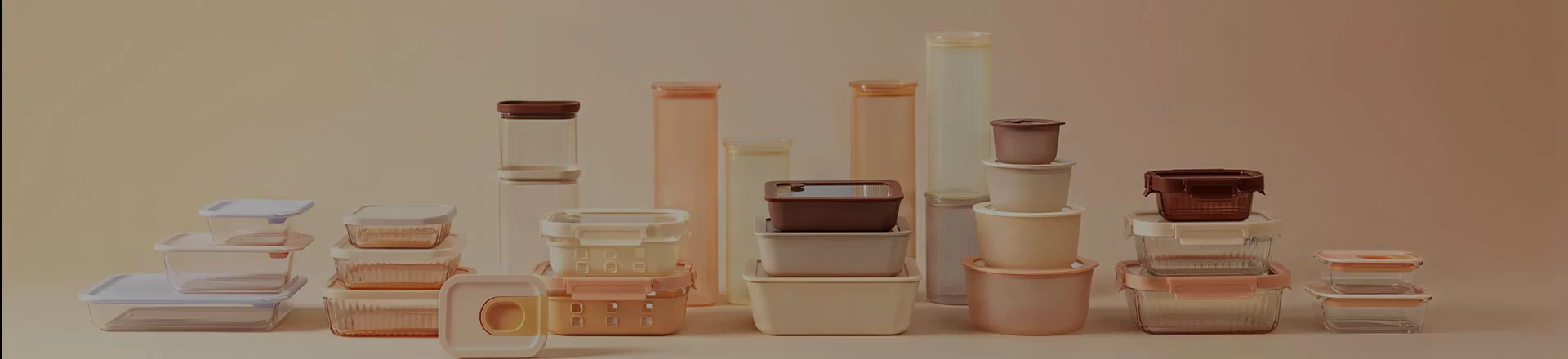
Guide on what glass storage containers are made in the usa
Discover a professional buyer's guide to material standards, manufacturing origins, and the technical advantages of high borosilicate glass food storage solutions.
When searching for what glass storage containers are made in the usa or global equivalents, procurement teams must prioritize material thermal stability and airtight integrity over mere origin. High borosilicate glass offers the most robust performance for multi-use environments.
Utilization of high borosilicate glass ensures resistance to extreme temperature fluctuations, making containers safe for oven-to-freezer transitions without cracking.
Integration of BPA-free PP or PE lids with airtight locking mechanisms prevents leakage and extends food freshness through a vacuum-like seal.
Nestable and stackable geometries maximize storage efficiency in commercial kitchens and residential refrigerators, reducing operational waste.
Superior thermal shock resistance compared to soda-lime glass, allowing for safer reheating and baking transitions.
BPA-free polypropylene or polyethylene lids provide a leak-proof seal, essential for transporting liquids and preserving nutrients.
Distributed sizing (e.g., 230ml to 1940ml) meets a spectrum of needs from condiment storage to bulk food prep.
| Feature Parameter | Standard Grade | Premium Grade (IKOO) | Compliance | Compatibility | Lead Time |
|---|---|---|---|---|---|
| Glass Material | Soda-Lime Glass | High Borosilicate Glass | ISO 9001 | Oven/Microwave | Standard |
| Lid Material | Basic Plastic | BPA-Free PP/PE | FDA Approved | Fridge/Freezer | Customizable |
| Thermal Resistance | Moderate | Extreme High/Low | Certified | Thermal Shock Safe | Standard |
| Sealing Method | Press-fit | Airtight Locking | Leak-proof Test | Transport Safe | Config Dependent |
| Shape Options | Round | Rect/Square/Round | Industry Std | Storage Optimized | Config Dependent |
| Capacity Range | Fixed Sizes | 230ml - 1940ml | Verified Vol | Multi-use | Request Quote |
| MOQ | Variable | 3000 pieces | B2B Standard | Wholesale | Fixed |
| Cleaning | Hand Wash | Dishwasher Safe | Material Test | Hygienic | Standard |
Challenge: Transitioning from plastic to sustainable materials. Solution: Deployment of 1940ml borosilicate containers. Outcome: Increased durability and thermal safety for reheating.
Challenge: Disorganized storage and food spoilage. Solution: Standardized stackable 560ml sets. Outcome: Maximized refrigerator space and improved visibility.
Challenge: Frequent oven usage leading to glass breakage. Solution: Transition to high borosilicate glass. Outcome: Zero breakage during rapid heating cycles.
Challenge: Need for premium, eco-friendly food gift sets. Solution: Mixed capacity glass containers with PE lids. Outcome: Increased perceived value and consumer trust.
Challenge: High oxidation in small batches of sauces. Solution: 230ml airtight containers. Outcome: Extended shelf life through superior sealing.
Challenge: Need for non-reactive containers for chemical analysis. Solution: Pure borosilicate glass. Outcome: Elimination of contamination risk compared to plastic.
Requires leak-proof seals for transportation. Borosilicate glass ensures contents stay fresh and lids stay secure during transit.
Requires freezer-safe materials that don't become brittle. High borosilicate glass maintains structural integrity at sub-zero temperatures.
Requires non-leaching materials. BPA-free PP lids and glass bodies ensure no chemical migration into the food.
Requires extreme durability and dishwasher safety. Our glass sets withstand repeated high-temperature commercial washing cycles.
Requires premium aesthetics and multi-size functionality. Sets with 230ml, 560ml, and 1940ml options provide high utility value.
Focuses on space-saving nestable designs. Clear borosilicate glass ensures easy content identification and organized pantry layouts.
Implementation of rigorous process controls ensures dimensional consistency and material purity across every batch of containers produced.
Strict adherence to FDA standards for both borosilicate glass and PP/PE lids ensures that products are safe for direct food contact without migration.
Every product line undergoes rapid thermal cycling tests to verify that the borosilicate structure can withstand the stress of oven and freezer use.
Borosilicate glass contains boron trioxide, which significantly lowers the coefficient of thermal expansion. This makes it far more resistant to thermal shock than soda-lime glass, preventing cracks during oven or freezer use.
No, while the borosilicate glass containers are microwave-safe, the PP/PE lids are not designed for high-heat microwave or oven use. Lids should be removed or loosely placed during heating.
Check for a high-grade silicone or PP seal and a locking mechanism. When considering what glass storage containers are made in the usa or abroad, a visible airtight gasket is the primary indicator of leak-proof performance.
For professional manufacturing lines, the minimum order quantity is typically 3000 pieces. This ensures production efficiency and cost-effectiveness for the buyer.
FDA approval is critical for food safety, while ISO 9001 certification indicates that the manufacturer maintains consistent quality management systems across production.
Yes, professional manufacturers provide round, square, and rectangular options, with custom molds available for larger scale OEM orders to meet specific branding or packaging requirements.
Request a technical consultation and customized quotation for high borosilicate glass food storage containers today.
If you are interested in our products, you can choose to leave your information here, and we will be in touch with you shortly.


