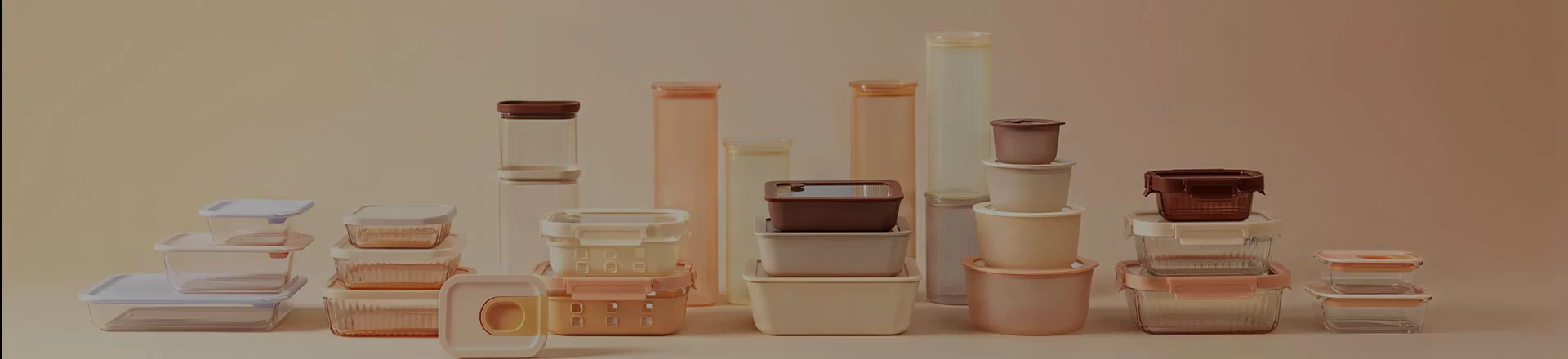
The global shift toward mindful eating and organized meal preparation has significantly increased the demand for specialized storage solutions. Among these, the concept of 4 compartment glass food containers has emerged as a gold standard for those seeking to balance nutritional precision with environmental sustainability. By allowing users to separate different food groups in a single vessel, these containers eliminate the need for multiple small bowls, streamlining the kitchen experience and reducing overall waste.
From a manufacturing perspective, the evolution of borosilicate and tempered glass has allowed for the creation of containers that are not only durable but also remarkably lightweight. The industry is moving away from bulky, heavy designs toward "ultra-light" specifications that maintain structural integrity while improving portability. This technical progression ensures that high-capacity storage no longer comes with the burden of excessive weight, making them ideal for daily commutes and professional meal prepping.
Whether you are a health-conscious individual or a commercial food provider, investing in high-quality 4 compartment glass food containers provides a hygienic, non-reactive environment for food preservation. By adhering to international safety standards such as FDA and LFGB, these glass solutions ensure that no harmful chemicals leach into the food, providing a safer alternative to plastic storage that aligns with modern health priorities.

The Evolution of Glass Storage Engineering
The engineering of 4 compartment glass food containers has undergone a radical transformation, moving from heavy, thick-walled vessels to ultra-lightweight designs. Modern manufacturing processes now allow for a 10% reduction in weight compared to traditional containers of the same capacity, without compromising the strength of the glass. This innovation is critical for the "on-the-go" consumer who requires the purity of glass but the convenience of lightweight materials.
Furthermore, the integration of nestable and stackable geometries has optimized storage space in both residential refrigerators and industrial warehouses. By refining the curvature and wall thickness, manufacturers have created a system that maximizes volumetric efficiency, ensuring that these containers can be stored compactly and lifted easily, reducing the physical strain on the user during bulk handling.
Defining Modern Multi-Compartment Glass Solutions
At its core, a multi-compartment glass system is a precision-engineered food storage tool designed to keep diverse food groups separate and fresh. Unlike single-chamber bowls, these specialized vessels prevent flavor migration and texture degradation, which is essential for maintaining the culinary quality of a balanced meal. They represent the intersection of ergonomic design and material science.
In the context of the modern food industry, these containers address the urgent need for BPA-free, non-toxic alternatives to disposable plastics. By utilizing high-grade glass, they provide a chemically inert surface that does not react with acidic foods or absorb odors, making them a permanent solution for hygienic food management across various global regions.
The practical definition extends beyond just the glass; it includes the synergy between the transparent body and the PP locking lid. This combination ensures an airtight seal that prevents leakage, while the transparency allows for immediate visual inventory of the contents, reducing food waste by ensuring ingredients are used before they expire.
Core Components of High-Performance Glassware
The primary strength of 4 compartment glass food containers lies in their material composition. The use of high-transparency glass ensures that users can monitor food freshness at a glance. This is paired with an ultra-lightweight structural design that reduces the overall mass by 10%, making the transition from the kitchen to the office seamless and efficient.
A critical component is the PP locking lid, which provides the necessary tension to create a leak-proof seal. For 4 compartment glass food containers, the lid must distribute pressure evenly across the surface to ensure that liquids from one section do not migrate into another, maintaining the integrity of the meal's various components.
Compliance and certification form the final core component of these products. With certifications such as BSCI, ISO, FDA, LFGB, and DGCCRF, these containers meet rigorous global safety and ethical standards. This ensures that the glass is lead-free and cadmium-free, providing absolute peace of mind for health-conscious consumers worldwide.
Comparative Efficiency of Glass vs Plastic Containers
When comparing storage mediums, glass consistently outperforms plastic in terms of longevity, health safety, and odor resistance. Plastic containers often degrade over time, developing micro-scratches that harbor bacteria and absorbing strong smells from spices or oils. In contrast, the non-porous nature of glass ensures a sterile environment that is easy to sanitize.
From a functional standpoint, the thermal stability of glass allows it to transition between different temperatures more reliably than many plastics. While plastic may warp or leach chemicals when heated, high-quality glass containers maintain their shape and safety profile, making them the superior choice for those who reheat their meals.
Performance Rating of 4 Compartment Glass Food Containers
Global Applications in Health and Wellness
In urban centers across North America and Europe, the adoption of 4 compartment glass food containers has become synonymous with the "meal prep" movement. Nutritionists recommend these tools to help clients adhere to strict caloric and macronutrient goals by visually partitioning proteins, carbohydrates, and vegetables. This structured approach reduces the cognitive load of dieting and encourages consistent healthy eating habits.
Beyond individual use, the hospitality and catering industries are integrating these containers into premium meal-kit delivery services. By replacing disposable plastic with reusable, certified glass, companies can enhance their brand image as sustainable and health-oriented. This transition is particularly evident in regions with strict plastic-reduction policies, where glass storage has become a regulatory and commercial necessity.
Long-Term Value and Sustainability Impact
The long-term value of transitioning to glass storage is measured not just in dollars, but in environmental impact. Glass is 100% recyclable and does not break down into harmful microplastics that contaminate the ocean and food chain. By choosing a durable, nestable glass system, consumers significantly reduce their reliance on single-use plastics, contributing to a circular economy.
From a logical perspective, the durability of these containers means a lower replacement frequency. While the initial investment may be higher than plastic, the lifespan of borosilicate or tempered glass—combined with a secure PP lid—ensures years of service. This reliability builds trust between the manufacturer and the consumer, fostering loyalty through quality.
Emotionally, there is a sense of dignity and care associated with using high-quality glassware. Presenting a meal in a clean, transparent, and organized glass container enhances the dining experience, transforming a simple office lunch into a mindful ritual of self-care and health.
Future Trends in Food Storage Technology
The future of food storage is leaning heavily toward "smart" materials and further weight reduction. We anticipate the integration of vacuum-sealing technologies directly into the lid structures of 4 compartment glass food containers, allowing for extended shelf life without the need for chemical preservatives. This would revolutionize how we store fresh produce and prepared meals.
Automation in manufacturing is also allowing for more customized glass shapes and colors, enabling brands to create containers tailored to specific dietary needs or aesthetic preferences. The trend toward "customized transparent" options allows commercial clients to brand their storage solutions while maintaining the functional benefits of high-grade glass.
Furthermore, the industry is exploring the use of recycled glass cullet to further lower the carbon footprint of production. By combining recycled materials with ultra-lightweight engineering, the next generation of glass containers will be the most sustainable tools in the kitchen, aligning perfectly with global ESG (Environmental, Social, and Governance) goals.
Technical Analysis of Blooming Series Glass Storage Specifications
| Feature Dimension |
Technical Specification |
User Benefit |
Compliance Standard |
| Material Weight |
10% Reduction |
Easier Portability |
ISO Standards |
| Lid System |
PP Locking Lid |
Leak-Proof Seal |
FDA Approved |
| Storage Logic |
Nestable/Stackable |
Space Optimization |
Industry Standard |
| Safety Profile |
Non-Reactive Glass |
Hygienic Preservation |
LFGB Certified |
| Cleaning Mode |
Smooth Surface |
Easy to Clean |
DGCCRF |
| Manufacturing |
Customized Colors |
Brand Alignment |
BSCI Audited |
FAQS
Yes, the glass portion of our Blooming Series is designed to withstand temperature changes. However, we strongly recommend removing the PP locking lid before microwaving to allow steam to escape and to prevent the plastic from overheating. Always ensure the container is microwave-safe according to specific model instructions.
The 10% weight reduction is achieved through advanced precision molding and material optimization, not by simply making the walls thinner in a way that compromises strength. These containers maintain high structural integrity and impact resistance, making them durable enough for daily use while being easier to carry.
Absolutely. The partitioned design of 4 compartment glass food containers is specifically engineered to create physical barriers between food groups. When paired with our secure PP locking lids, the containers maintain an airtight seal that prevents liquid migration and ensures flavors remain distinct.
Our products are rigorously tested and certified by globally recognized bodies, including the FDA (USA), LFGB (Germany), and DGCCRF (France). Additionally, our manufacturing facilities are BSCI and ISO certified, ensuring both product safety and ethical labor practices.
The PP locking lids are designed for convenience and are generally top-rack dishwasher safe. To extend the life of the silicone seals and the locking mechanism, we recommend using a mild detergent and avoiding extremely high-temperature drying cycles.
Yes, while our standard is high-transparency glass, we offer customized color options for bulk commercial orders. This allows brands to align their food storage solutions with their corporate identity while maintaining the high performance and safety standards of our Blooming Series.
Conclusion
In summary, the transition to 4 compartment glass food containers represents a significant leap forward in both personal health and environmental responsibility. By combining ultra-lightweight engineering with a non-reactive glass body and secure locking lids, these containers solve the age-old conflict between convenience and sustainability. The ability to partition meals effectively, combined with global safety certifications like FDA and LFGB, ensures that users can maintain a healthy lifestyle without compromising on quality or safety.
Looking ahead, as the world moves toward a zero-plastic future, the role of high-performance glassware will only grow. We encourage consumers and businesses alike to move away from disposable culture and invest in durable, nestable, and hygienic storage solutions. By choosing engineered glass, you are not just organizing your meals; you are investing in a sustainable legacy for the planet. Visit our website to explore our full range: www.ikoo-glass.com