
Start with the lid requirement, then verify the complete product
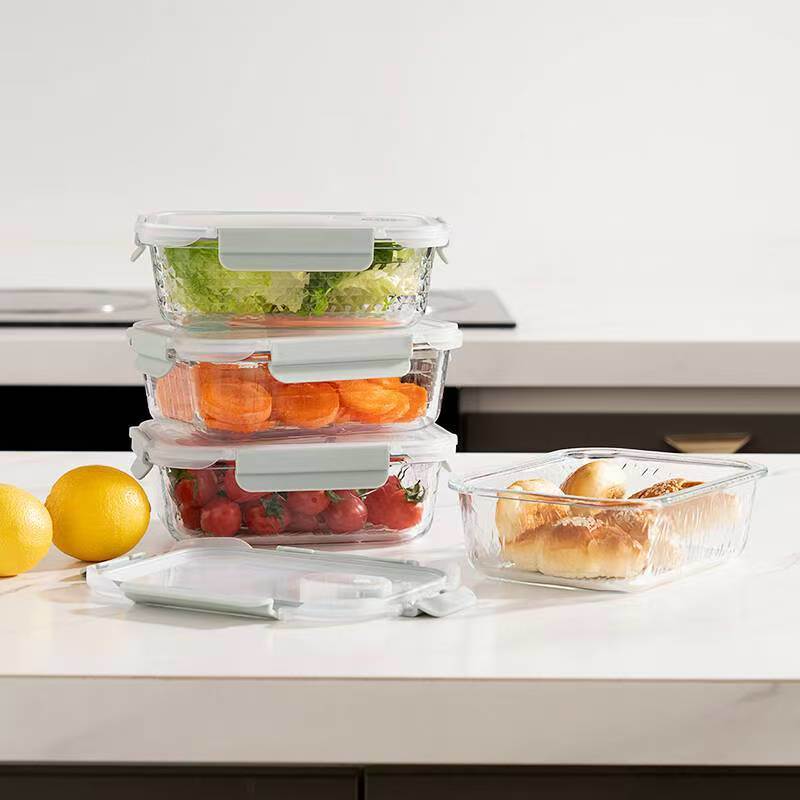
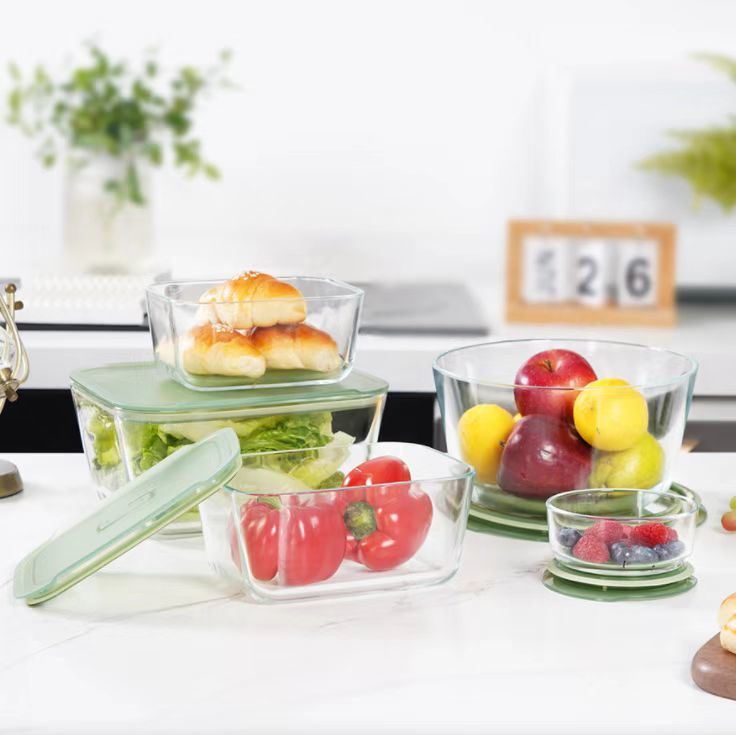
A lid description is a useful starting point for selecting a glass food storage container. It is not a substitute for a complete specification sheet. This guide compares two published IKOO GLASS Blooming Series catalogue entries: a container listing with a PP locking lid and a 940 ml listing with a tempered-glass lid and silicone.
The comparison below uses the descriptions available in those two entries. It helps buyers decide which product to request samples of and which details still need written confirmation. It does not establish temperature limits, sealing performance, certification status or suitability for a particular heating method.
What the two catalogue entries actually say
| Purchasing detail | PP locking-lid entry | Glass-and-silicone-lid entry |
|---|---|---|
| Series name in the description | Blooming Series Food Storage Containers | Blooming Series Food Storage Containers |
| Material wording | Borosilicate glass in the product title; PP locking lid in the description | Borosilicate glass in the product title; tempered glass with silicone in the lid-material field |
| Size information | A variety of sizes is listed; a capacity and dimension matrix is not supplied in the excerpt | 940 ml appears in the selected product title; a complete range of capacities is not supplied |
| Design features listed | Nestable, stackable, easy to lift and easy to clean | Nestable, stackable, easy to lift and easy to clean |
| Colour wording | Transparent and customized | Transparent and customized |
| What still needs checking | Exact SKU, dimensions, lid fit, component materials, care instructions and packaging | Exact SKU, dimensions, lid fit, component materials, care instructions and packaging |
These are supplier catalogue descriptions, rather than independently verified test results. Ask IKOO GLASS to confirm the configuration of the sample and the eventual order before using any description as a purchasing specification.
A practical way to shortlist the two options
If the brief specifically calls for a PP locking lid
Start with the PP locking-lid listing. Ask for the available capacity matrix, the exact lid and gasket components, and confirmation that the proposed lid belongs to the chosen container SKU. The word “locking” identifies the described closure format; it does not establish an airtight or leak-proof rating.
If transport sealing is important, make it a separate sample-evaluation requirement. Request the applicable test method and results for the proposed configuration instead of assuming that a locking mechanism proves performance in transit.
If the brief calls for a glass lid with silicone
Start with the selected 940 ml glass-and-silicone-lid listing. Confirm whether that description matches the sample supplied and ask which other capacities, if any, are offered with the same lid arrangement.
If the brief requires several sizes
Request one comparison sheet covering the exact dimensions, stated capacities, container weights, lid compatibility and packaging quantities of the proposed SKUs. The excerpts do not supply a complete size matrix, so they do not establish that either lid configuration is available across every size required by a retail range.
Keep application labels separate from care instructions
The product descriptions contain application-oriented wording.
What to ask for with the sample request
- Product identity: Which SKU and lid assembly does the quotation cover? Please provide the component list and current specification sheet.
- Size details: What are the dimensions, stated capacity, weight and available size options for that SKU?
- What sealing or leakage tests, if any, apply to the proposed container-and-lid combination?
- Care instructions: What written heating, cooling, cleaning and storage instructions apply separately to the body, lid and seals?
- Documentation: Which current supporting documents apply to this exact product and the buyer’s stated market requirements? Please provide the documents rather than only a list of names.
- Customization: Which colours, branding and packaging options are available, and what does the approved sample include?
- Order terms: Please confirm the current minimum order, sample process, price, production schedule and packaging specification in the quotation.
A purchasing decision you can document
Use the PP locking-lid entry as a starting point when that closure format is part of the brief. Use the selected glass-and-silicone-lid entry as a starting point when that lid arrangement is the requirement. In both cases, make the final selection against the specification sheet, written care instructions, supporting documents and approved sample.
Where a detail is missing, keep it as an open purchasing question. Confirming the exact configuration with IKOO GLASS is more useful than extending a catalogue label into an unsupported product claim.
Catalogue sources
- Blooming Series listing with a PP locking lid
- Selected 940 ml listing with a tempered-glass lid and silicone

About the author