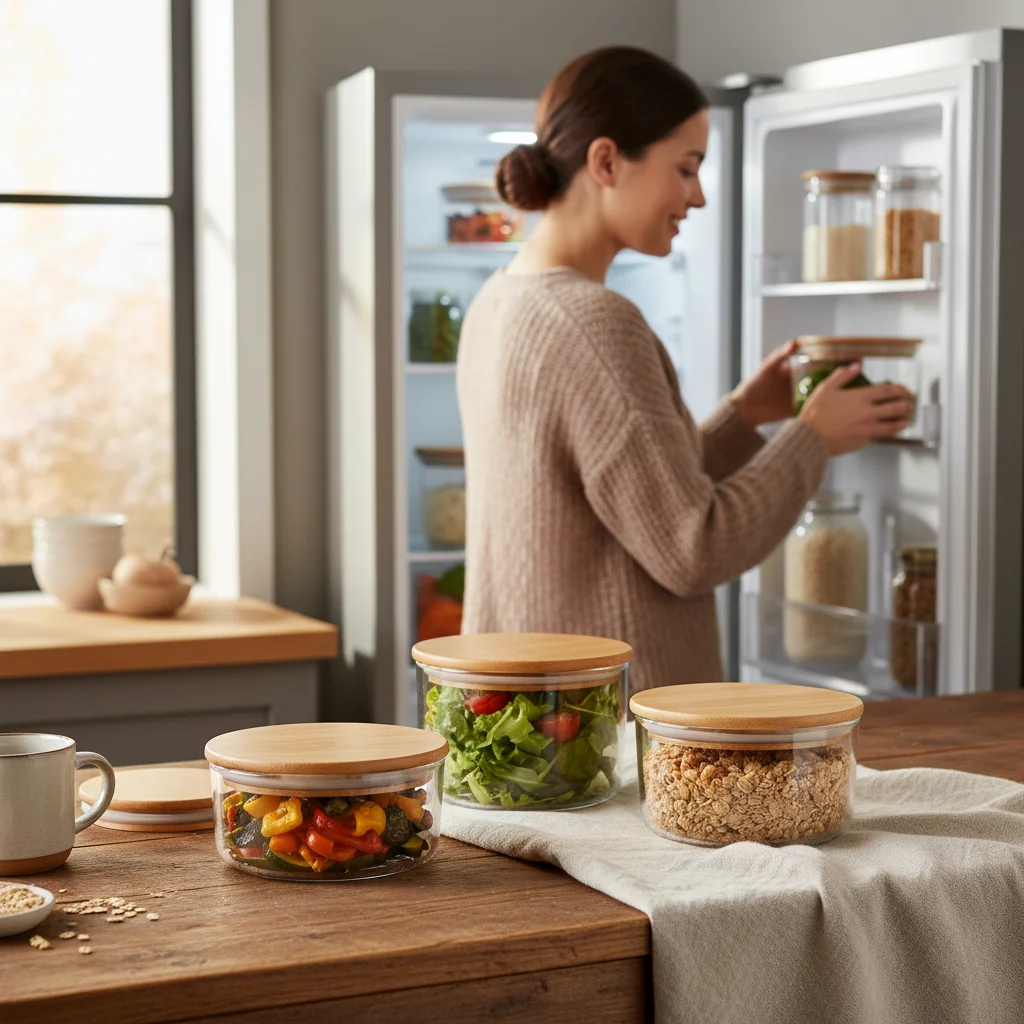
The shift toward sustainable kitchenware has transformed how procurement managers and retail buyers approach food storage. As consumers increasingly abandon single-use plastics in favor of non-toxic, durable alternatives, the demand for high-performance borosilicate glassware has surged.
For businesses operating in the food service, retail, or hospitality sectors, sourcing relies on balancing thermal resilience with airtight reliability. The challenge lies in identifying manufacturing partners who can provide consistent quality across large volumes while meeting stringent FDA and ISO standards.
Navigating the complexities of glass containers for food storage wholesale requires an understanding of material science, specifically the differences between soda-lime and borosilicate glass, to ensure end-user safety and product longevity.


Unlike standard soda-lime glass, borosilicate glass incorporates boron trioxide, which significantly lowers the coefficient of thermal expansion. In a wholesale context, this material is preferred because it minimizes the risk of shattering during rapid temperature changes, making it the ideal choice for containers that transition from freezers to ovens.
The structural integrity of these containers is a key selling point for global distributors. By utilizing high borosilicate glass, manufacturers like IKOO GLASS ensure that the products are not only eco-friendly but also chemically inert, preventing the leaching of toxins into food—a critical requirement for FDA and ISO9001 certification.
The efficacy of a food storage container is determined as much by its lid as by its base. In the wholesale market, the "4 lock" mechanism has become a benchmark for reliability. This system employs four secure hinge clips that apply uniform pressure across the lid, ensuring a tight seal that prevents air and moisture from penetrating the container.
To achieve a true airtight and leakproof function, the integration of a food-grade PP lid with a silicone sealing ring is essential. This BPA-free combination creates a vacuum-like barrier, which is vital for transporting liquids such as soups or sauces without leakage. The removable nature of the silicone seal also allows for deep cleaning, reducing the risk of bacterial buildup.
For branding purposes, the versatility of these lids allows for customization in color and material. By pairing high-durability glass with customized PP lids, wholesalers can offer products that cater to specific market aesthetics while maintaining the technical performance required for professional meal prep and home organization.
Thermal shock occurs when a material undergoes a rapid change in temperature, causing internal stress that can lead to fractures. For commercial food storage, this is a primary point of failure. Borosilicate glass is engineered to withstand these stresses, allowing for a wide operational temperature range.
High-performance food storage glass must maintain structural stability from -40°C in deep-freeze environments up to 560°C in high-heat oven settings, with a thermal shock resistance of at least 120°C.
This versatility allows a single product to function as a mixing bowl, a baking dish, and a storage container. When sourcing glass containers for food storage wholesale, verifying the specific temperature resistance and thermal shock ratings is the most reliable way to ensure product safety for the end consumer.
Evaluating different glass materials requires a qualitative look at how they perform under stress. While soda-lime glass is cost-effective for simple beverage ware, it lacks the resilience needed for oven-to-table food storage. Borosilicate glass, conversely, offers a higher value index across durability and safety metrics.
The following analysis illustrates the relative performance of common storage materials based on key operational indices, such as heat resistance, leak prevention, and long-term durability.
In a typical industrial meal-prep setting, the ability to stack containers efficiently is as important as their airtight seal. Wholesalers often prioritize rectangle, square, and round shapes to allow clients to maximize refrigerator space. For instance, a meal-prep service may utilize 35oz rectangular containers for main courses and 12oz square containers for sides, creating a modular system for the end-user.
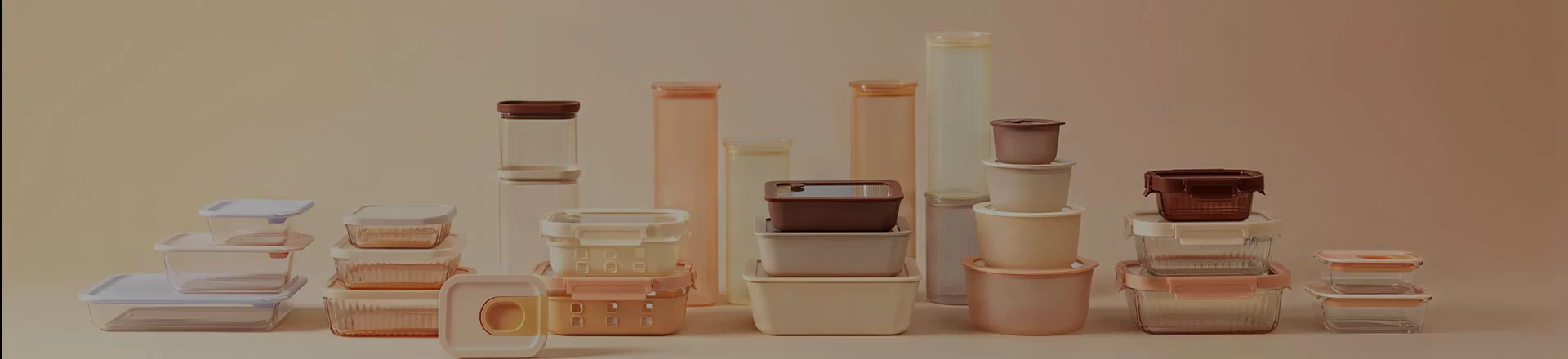
Furthermore, the introduction of specialized designs, such as fluted glass or color-sprayed finishes, allows these products to move from the pantry to the dining table. This "oven-to-table" transition reduces the need for extra serving dishes in hospitality environments, effectively lowering operational overhead while enhancing the visual presentation of the food.
The market is moving beyond simple functionality toward "aesthetic utility." We are seeing a rise in demand for colored glass containers and fluted textures that blend modern interior design with industrial-grade performance. These trends are driven by a consumer base that values both the health benefits of glass and the visual appeal of their kitchen organization.
Technological advancements in surface treatment, such as customized sprayed finishes, allow wholesale partners to differentiate their product lines. This customization is not merely cosmetic; it allows brands to create distinct identity lines for different product tiers—such as a "Professional Series" in clear glass and a "Designer Series" in muted tones.
Sustainability remains the overarching driver. The move toward 100% recyclable materials and carbon reduction in the manufacturing process is no longer optional. Global partners are now evaluating suppliers based on their ability to reduce production emissions, making eco-conscious manufacturing a key competitive advantage.
Selecting the right partner for glass containers for food storage wholesale requires a rigorous evaluation of technical specifications over marketing claims. The primary focus should be on the certification of materials and the consistency of the seal mechanism across different sizes.
A comprehensive procurement strategy involves testing the product across its full temperature spectrum—from the freezer to the oven—to verify that the thermal shock ratings are accurate. Additionally, the quality of the PP lids and the longevity of the silicone rings under repeated dishwasher cycles are critical indicators of long-term value.
The following table provides a decision framework for buyers to compare different product specifications against typical commercial requirements.
| Evaluation Factor | Entry-Level Req. | Professional Req. | Industrial Grade |
|---|---|---|---|
| Material Type | Soda-Lime Glass | Borosilicate Glass | High Borosilicate |
| Temp Range | 0°C to 150°C | -40°C to 400°C | -40°C to 560°C |
| Seal Type | Simple Press Lid | Silicone + 2 Lock | Silicone + 4 Lock |
| Certification | Basic Food Grade | FDA / ISO9001 | FDA / ISO / FSC® |
| Thermal Shock | Low (<60°C) | Medium (80-100°C) | High (120°C+) |
| Customization | Standard Clear | Custom Lid Color | Sprayed Finish/Fluted |
The primary advantage is thermal resilience. Borosilicate glass has a significantly lower coefficient of thermal expansion, meaning it can withstand extreme temperature fluctuations without cracking. For wholesale buyers, this translates to a lower defect rate and a safer product for consumers who move containers from the freezer directly into a microwave or oven.
A 4-lock system ensures a more uniform distribution of pressure across the lid's surface compared to 2-lock or press-fit lids. When paired with a BPA-free silicone sealing ring, it creates an airtight environment that prevents oxidation and inhibits the entry of external odors. This significantly extends the shelf life of stored foods and ensures the containers are completely leakproof for transport.
High borosilicate glass containers are typically safe for use in the refrigerator, freezer, microwave, dishwasher, and oven. However, it is critical to note that while the glass base is heat-resistant, the PP lids are generally not oven-safe and should be removed before heating. Always verify the specific temperature limits (e.g., up to 560°C for the glass) provided by the manufacturer.
At a minimum, look for FDA certification to ensure material safety for food contact and ISO9001 for quality management systems. For companies prioritizing sustainability, FSC® certification for packaging and evidence of carbon reduction technologies in the manufacturing process are important indicators of a responsible and high-quality supplier.
Yes, modern manufacturing allows for a variety of custom options. Sprayed finishes can be applied to the glass for a matte or colored look, and lids can be customized in various colors to match a brand's corporate identity. These options allow wholesalers to differentiate their offerings in a crowded market while maintaining the core technical specifications of the borosilicate glass.
A balanced wholesale set usually includes a mix of shapes and volumes. A typical effective set includes rectangular containers (e.g., 35oz and 21oz) for main meals, square containers (e.g., 27oz and 11oz) for snacks or side dishes, and round containers (e.g., 32oz) for soups or salads. This variety ensures that the end-user has a solution for every possible food storage need.
The transition toward high borosilicate glassware represents a broader industry movement toward health, sustainability, and extreme durability. For those sourcing glass containers for food storage wholesale, the focus must remain on the intersection of material science and functional design—ensuring that every unit delivered meets the rigorous demands of modern kitchen environments.
By prioritizing certified borosilicate materials and advanced sealing technologies, businesses can provide products that truly enhance the consumer's life experience. As innovation continues to drive the industry, the integration of artistic design with industrial strength will define the next generation of kitchenware leadership.

If you are interested in our products, you can choose to leave your information here, and we will be in touch with you shortly.