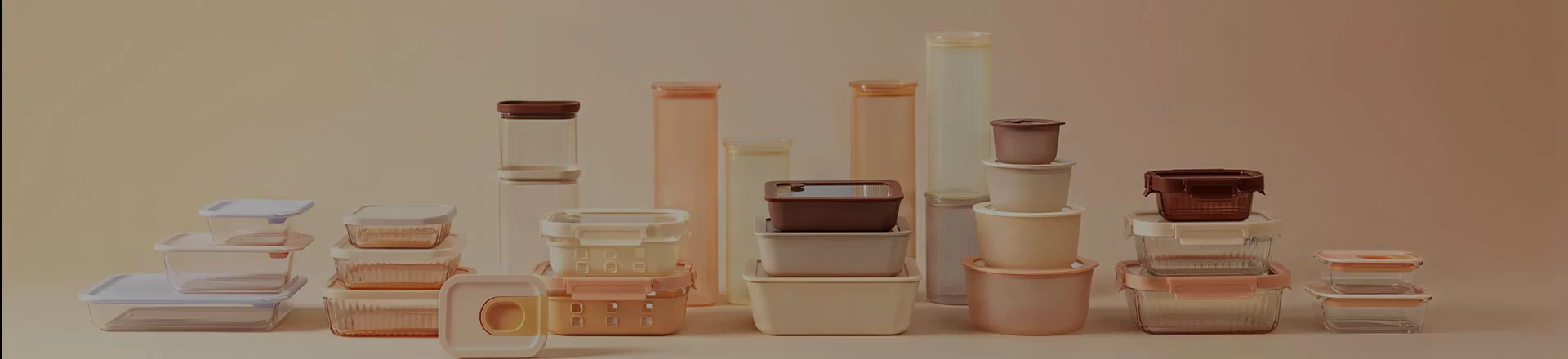
In the modern culinary landscape, the demand for high-quality food storage has evolved beyond mere utility. Today, consumers seek decorative glass food storage containers that blend aesthetic elegance with professional-grade functionality, transforming the kitchen from a workspace into a curated gallery of freshness.
The global shift toward sustainable living has accelerated the adoption of borosilicate glass over plastic. By combining thermal shock resistance with a clean, minimalist design, these containers address the critical need for non-toxic, long-term storage solutions that can withstand the rigors of both the freezer and the oven.
Understanding the technical specifications—from the precision of silicone gaskets to the purity of high-borosilicate glass—allows homeowners and professional chefs alike to maximize food preservation. This guide explores how these versatile vessels optimize kitchen organization while maintaining the highest safety standards.

Global Relevance of Borosilicate Glass Storage
The global market for food preservation is currently undergoing a massive transition, driven by ISO safety standards and a growing awareness of endocrine disruptors found in low-grade plastics. decorative glass food storage containers have emerged as the gold standard, providing a chemically inert environment that ensures food purity across diverse climates and culinary traditions.
From the high-density urban kitchens of Tokyo to the expansive pantries of North America, the demand for borosilicate glass is rising. This material's unique ability to handle extreme temperature fluctuations makes it indispensable for a global population that increasingly relies on "cook once, eat thrice" meal preparation cycles.
Defining Modern Decorative Glass Food Storage Containers
At its core, a decorative glass food storage container is more than just a jar; it is a precision-engineered tool designed for both preservation and presentation. Unlike standard soda-lime glass, these containers utilize high-borosilicate glass, which incorporates boron trioxide to significantly lower the coefficient of thermal expansion, preventing cracks during rapid heating or cooling.
These vessels typically feature a multi-component locking system, combining a durable PP (polypropylene) lid with a food-grade silicone gasket. This synergy creates an airtight seal that prevents oxidation and leakage, ensuring that the contents remain fresh while the transparent body allows for immediate visual inventory of the pantry.
In the context of modern industry, these containers bridge the gap between industrial food safety and interior design. By offering a sleek, round geometry and crystal-clear transparency, they satisfy the humanitarian need for safe food storage while meeting the consumer's desire for an organized, aesthetically pleasing kitchen environment.
Core Material Components and Thermal Engineering
The structural integrity of decorative glass food storage containers relies heavily on the purity of the borosilicate glass used. This material is engineered to be non-porous, meaning it does not absorb odors, stains, or flavors from previous meals, which is a critical requirement for professional FDA-certified kitchenware.
Thermal resilience is the defining characteristic of these containers, featuring an extraordinary temperature range from -40°C to 560°C. This allows the user to transition a container from deep-freeze storage directly to a high-heat environment without risking thermal shock, a feat impossible for standard tempered glass.
Complementing the glass is the PP lock lid with a silicone gasket, which provides the necessary mechanical seal. This combination ensures that the container is not only heat-resistant but also leak-proof, making it suitable for storing liquids, soups, and marinated proteins without the risk of spills.
Versatility Across Different Capacity Sizes
One of the primary advantages of professional glass storage systems is the availability of a full range of sizes to suit different culinary needs. Whether it is a small 180ml portion for condiments or a massive 3500ml bowl for family-style meal prep, the scalability ensures that users can optimize their fridge and cupboard space efficiently.
The variety in sizing allows for a modular approach to food storage. For instance, the 500ml and 1000ml options are ideal for individual lunch portions, while the 2000ml and 3500ml versions function as mixing bowls that can double as storage containers, reducing the need for additional dishware.
Performance Rating of Decorative Glass Food Storage Containers by Size
Real-World Applications in Professional and Home Kitchens
In commercial settings, such as Michelin-star restaurants or high-volume catering services, decorative glass food storage containers are used for "mise en place." The transparency allows chefs to identify ingredients instantly, while the borosilicate properties ensure the containers can survive the rapid transition from a blast chiller to a warming oven.
For the home user, these containers revolutionize meal prepping. The ability to mix ingredients in the 3500ml bowl and then seal it with a PP lid for refrigerator storage eliminates the need for plastic wrap and multiple bowls, streamlining the cleaning process and reducing household waste.
Long-term Sustainability and Health Advantages
The shift toward glass is fundamentally a move toward health and environmental dignity. Unlike plastics, which can leach phthalates and BPA into food—especially when heated—borosilicate glass is chemically stable and non-reactive. This ensures that the nutritional profile of the food remains intact, regardless of the storage duration or temperature.
From a sustainability perspective, these containers offer a lifecycle that far exceeds that of disposable plastic. Because they are durable, dishwasher-safe, and resistant to staining, a single set of glass containers can replace thousands of single-use plastic bags and containers over a decade, significantly reducing the carbon footprint of the household.
Furthermore, the use of FDA-approved materials and ISO9001 certified manufacturing processes guarantees that every piece is free from hazardous contaminants. This commitment to quality provides peace of mind for parents and health-conscious individuals who prioritize non-toxic living environments.
Future Innovations in Glass Food Preservation
The future of decorative glass food storage containers lies in the integration of smart materials and personalized customization. We are seeing a trend toward OEM/ODM capabilities where colors and logos are integrated directly into the glass, allowing brands to create signature storage lines that reflect their corporate identity.
Digital transformation is also impacting the manufacturing process, with automated precision molding reducing the wall thickness of the glass without compromising strength. This results in lighter containers that maintain the same high-temperature resistance, making them easier to transport and handle in large quantities.
Additionally, the industry is moving toward "closed-loop" packaging. Retail-friendly color boxes are being replaced with biodegradable materials, ensuring that the entire product lifecycle—from the borosilicate bowl to the outer shipping carton—aligns with global green energy and sustainability goals.
Comparative Analysis of Borosilicate Glass Storage Specifications
| Capacity Variant |
Thermal Range |
Primary Material |
Ideal Use Case |
| 180ml |
-40°C to 560°C |
Borosilicate Glass |
Sauces & Spices |
| 500ml |
-40°C to 560°C |
Borosilicate Glass |
Side Dishes |
| 1000ml |
-40°C to 560°C |
Borosilicate Glass |
Individual Meals |
| 2000ml |
-40°C to 560°C |
Borosilicate Glass |
Family Salads |
| 3500ml |
-40°C to 560°C |
Borosilicate Glass |
Bulk Mixing/Prep |
| Custom OEM |
-40°C to 560°C |
Borosilicate Glass |
Branded Retail |
FAQS
Yes, borosilicate glass is specifically designed for thermal resistance. These containers can withstand temperatures up to 560°C, making them safe for ovens. However, always remember to remove the PP lid before heating, as the lid is not designed for oven use.
The airtight seal is achieved through a combination of a rigid PP locking lid and a flexible, food-grade silicone gasket. The gasket creates a vacuum-like barrier that prevents air and moisture from entering, which significantly extends the freshness of the stored food.
Absolutely. Because of the low coefficient of thermal expansion in borosilicate glass, these containers can handle the extreme shift from -40°C to high heat without cracking, providing unmatched versatility for modern meal prep.
Yes, borosilicate glass is non-porous. Unlike plastic containers, which often absorb oils and colors from foods like tomato sauce or curry, these glass containers do not absorb odors or stains, ensuring a clean taste every time.
We offer a comprehensive range of sizes to fit any need, including 180ml, 500ml, 1000ml, 2000ml, and 3500ml. This allows for everything from storing a small amount of garlic to preparing a large batch of dough.
Yes, we provide full OEM/ODM capabilities. This includes the ability to customize colors, add your company logo, and design retail-friendly packaging to suit your specific brand identity and market requirements.
Conclusion
The adoption of decorative glass food storage containers represents a convergence of material science, health consciousness, and kitchen aesthetics. By utilizing high-borosilicate glass and secure PP locking lids, these containers solve the perennial struggle between food preservation and convenience, offering a durable, non-toxic alternative to plastic that excels from -40°C to 560°C.
As we move toward a more sustainable future, investing in high-quality, long-lasting glassware is not just a culinary choice but an environmental necessity. We encourage both home cooks and commercial enterprises to upgrade their storage systems to ensure maximum food safety and organizational efficiency. Visit our website: www.ikoo-glass.com