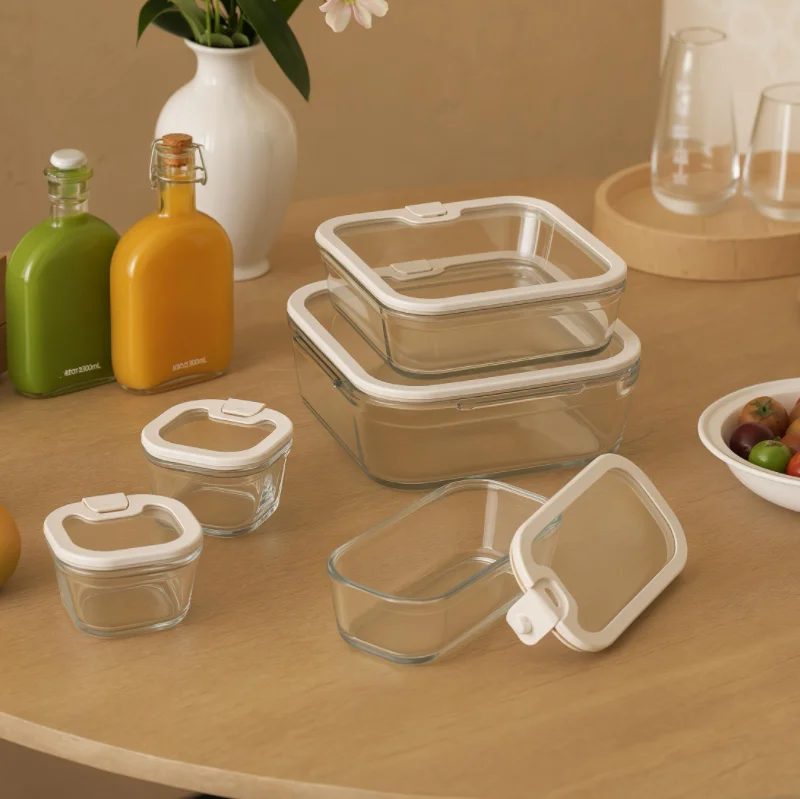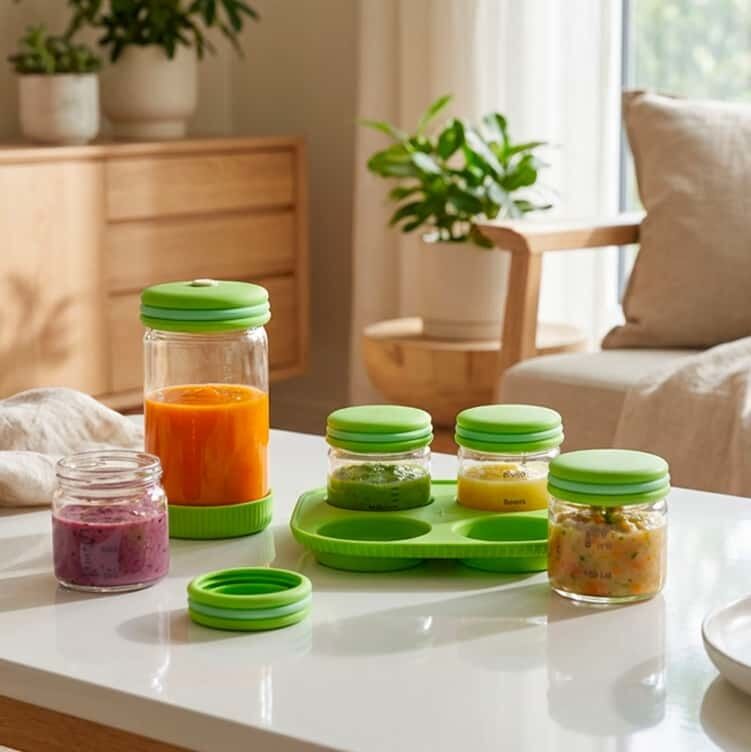
Glass containers with lids for food storage offer a practical way to keep food organized, protect freshness, and simplify everyday meal preparation. From storing leftovers and packing lunches to preserving dry ingredients and preparing meals in advance, the right container can support a wide range of kitchen needs.
Compared with many plastic alternatives, glass food storage containers are valued for their transparency, durability, and resistance to retaining food odors and stains. However, not all containers offer the same performance. Lid design, sealing quality, glass material, capacity, and intended use all influence which option works best.
This guide explains how to choose glass food storage containers with lids, compares common types, and highlights the features worth considering for home kitchens, food service businesses, and wholesale buyers.
Why Choose Glass Containers with Lids for Food Storage?
Glass food storage containers combine visibility with convenient food protection. Their transparent bodies make it easy to identify contents without opening the lid, helping users organize refrigerators, freezers, and pantry shelves more efficiently.
Another advantage is that glass generally does not absorb food odors or stains as readily as many plastic materials. This makes it suitable for storing tomato sauces, curries, dressings, and other strongly colored or aromatic foods.
The lid is equally important. A well-designed lid helps protect food from external contaminants and reduces exposure to air. Airtight or leak-resistant designs can also help prevent spills when storing soups, sauces, and prepared meals, although actual performance depends on the lid structure and seal.
For households, glass containers support meal preparation and leftover storage. For restaurants, catering companies, and food brands, they can provide a reusable, presentable solution for food handling and packaging.
When selecting a product, buyers should consider the complete container system rather than the glass body alone. A suitable lid, reliable fit, appropriate capacity, and clear care instructions all contribute to long-term usability.
What Types of Glass Food Storage Containers with Lids Are Available?
Different storage needs call for different container designs. Understanding the main options makes it easier to select products for specific applications.
| Container Type | Key Features | Recommended Uses |
|---|---|---|
| Glass containers with airtight lids | Designed to limit air exchange when properly sealed | Leftovers, prepared meals, and refrigerated foods |
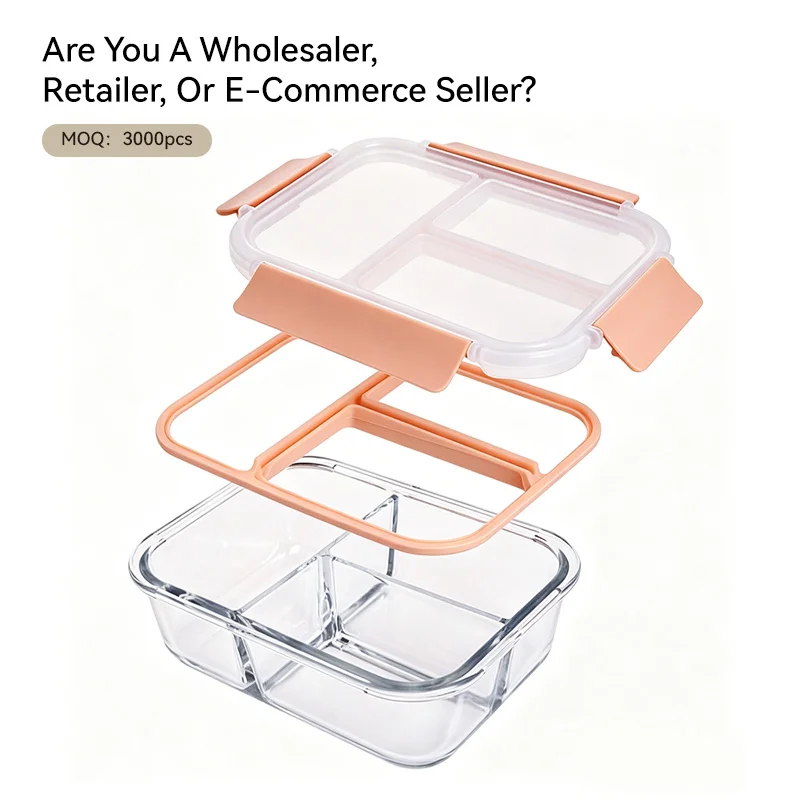
| Glass containers with snap-lock lids | Side clips or locking mechanisms secure the lid | Meal prep, lunch storage, and everyday use |
| Glass containers with silicone-sealed lids | Flexible seals help improve leak resistance | Sauces, moist foods, and portioned meals |
| Glass storage jars with lids | Often feature a tall, narrow or cylindrical shape | Grains, spices, nuts, and pantry ingredients |
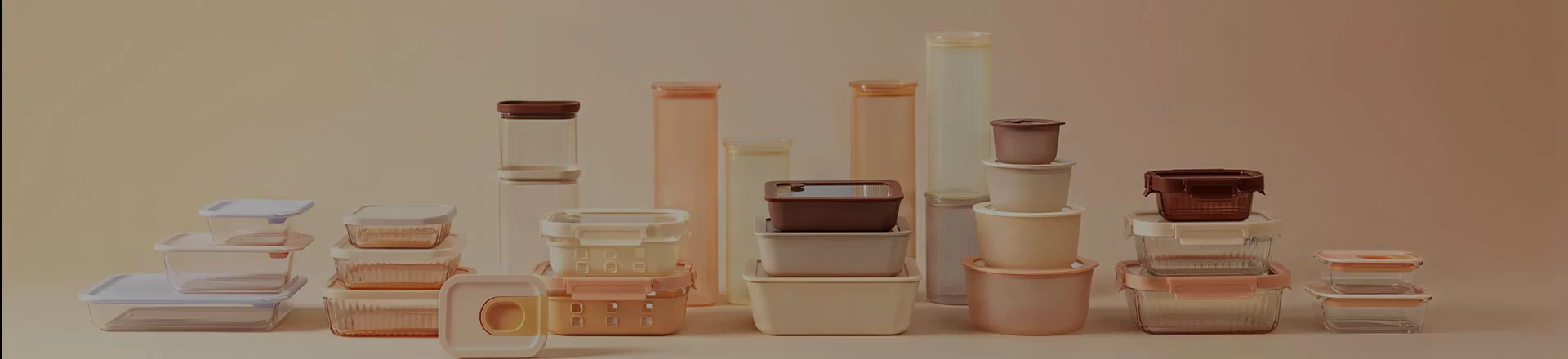
| Stackable glass food containers | Designed to organize storage space efficiently | Refrigerators, cabinets, and commercial kitchens |
| Glass vacuum storage containers | Use a compatible vacuum mechanism to remove air | Selected foods requiring reduced-air storage |
Not every lid provides the same level of protection. A standard cover may help keep dust away, while an airtight seal is designed to reduce air exchange. Vacuum containers use an additional mechanism and should be evaluated according to their specific instructions and performance claims.
Choosing the right design starts with the food being stored, the storage environment, and how frequently the container will be opened.
How to Choose the Right Lid for Glass Food Storage Containers
The lid is one of the most important factors when comparing glass containers for food storage. The best choice depends on whether the priority is freshness, portability, easy access, or space efficiency.
Airtight lids are useful for many refrigerated foods and pantry ingredients. They help limit air exposure when the container is correctly closed. Buyers should check the seal material and whether the design maintains a secure fit after repeated use.
Leak-resistant lids are particularly useful for soups, sauces, dressings, and packed lunches. However, leak resistance should not be assumed simply because a lid has clips. The complete design, gasket, closure system, and manufacturer's testing all matter.
Snap-lock lids offer convenient opening and closing. They can work well for daily meal preparation because users can access food without handling complicated mechanisms.
Vacuum lids are suitable when a product is specifically designed to remove air from the container. Vacuum storage is not a substitute for refrigeration or safe food-handling practices, and it does not make perishable foods shelf-stable.
Material compatibility is another consideration. Glass bodies and plastic, silicone, or other lid components may have different temperature limits. Always check the manufacturer's instructions before using a container in a microwave, oven, freezer, or dishwasher.
Are Glass Food Storage Containers Safe for Refrigerators, Microwaves, and Freezers?
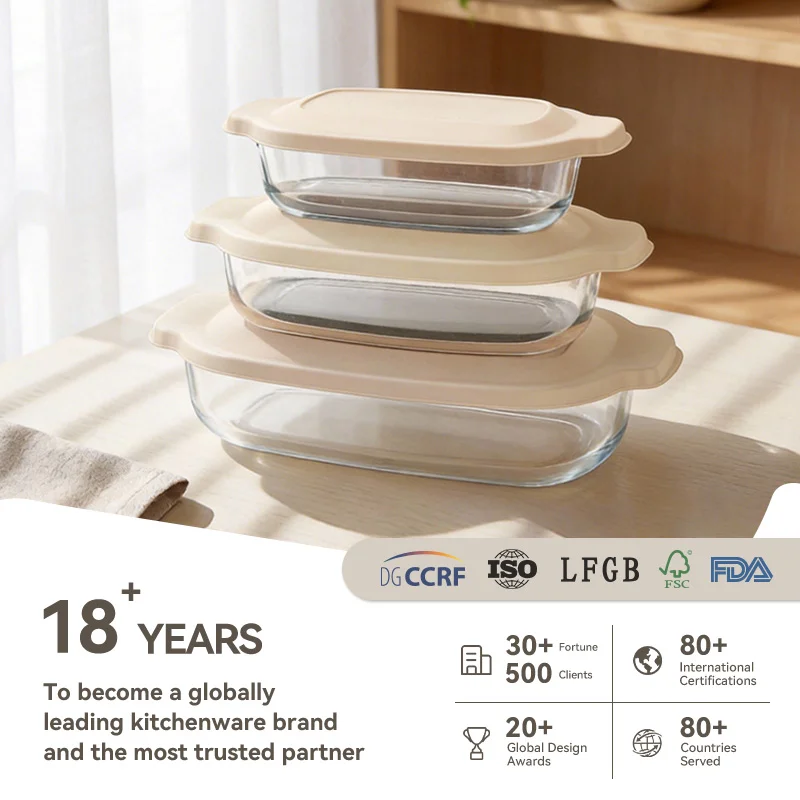
Glass containers are widely used for refrigerated food storage, but safe use depends on the glass type, product design, temperature changes, and lid material.
For refrigerator storage, choose a container with a secure-fitting lid and enough capacity for the intended portion. Allow hot food to cool according to appropriate food-safety guidance before sealing and refrigerating it.
For microwave use, confirm that the container is explicitly labeled microwave-safe. Remove lids or follow the manufacturer's instructions for venting, since many lids are not suitable for microwave heating.
For oven use, only use glass containers specifically designed and labeled for that purpose. Ordinary food storage containers may not withstand oven temperatures, and lids often have lower heat limits than glass bodies.
For freezer storage, select products approved for freezing and leave adequate room for liquids to expand. Avoid sudden temperature changes, such as placing a frozen container directly into a hot oven, because thermal shock can cause glass to break.
These precautions help extend product life and reduce the risk of damage. Buyers purchasing glass food storage containers in bulk should also confirm the temperature ratings and care instructions for both the glass and the lid.
What Sizes and Shapes Work Best for Meal Prep and Everyday Storage?
Capacity and shape affect how efficiently containers fit into a kitchen routine.
Small containers are useful for sauces, snacks, nuts, and individual portions. Medium-sized containers work well for lunches, chopped vegetables, side dishes, and leftovers. Larger containers can accommodate family meals, batch cooking, and bulk ingredients.
Rectangular and square containers are often convenient for refrigerator organization because their shapes make efficient use of shelf space. Round containers suit liquids and ingredients that are easy to scoop or stir. Tall glass jars can be more practical for dry goods such as rice, oats, coffee beans, and pasta.
For meal preparation, a selection of compatible sizes can be more useful than purchasing a large set of identical containers. Stackable designs may also reduce clutter, provided the lids and bases are designed to stack securely.
Commercial buyers should evaluate capacity according to portion size, packaging requirements, storage conditions, and end-user preferences. A consistent product range can simplify inventory management while giving customers options for different food categories.
Glass Containers vs. Plastic Containers for Food Storage
Glass and plastic containers each have advantages. The right choice depends on the application, handling requirements, and budget.
Glass is valued for its transparency, resistance to staining and odor retention, and suitability for repeated use when handled properly. It also provides a rigid, premium-looking surface for food presentation.
Plastic containers are often lighter and less likely to shatter when dropped. They can be convenient for travel, outdoor activities, and applications where minimizing weight is important.
Glass is generally heavier and can break under impact. Plastic performance varies by polymer, product quality, and temperature rating. Neither material should be evaluated without considering its intended use and care requirements.
For households, glass may be especially appealing for refrigerator storage, reheating in approved containers, and organizing leftovers. For food brands and retailers, the decision may also involve packaging appearance, transport costs, product positioning, and consumer preferences.
The most suitable option is the one that balances functionality, safety, durability, and total cost over its expected service life.
What Should Wholesale Buyers Look for in a Glass Food Storage Container Supplier?
For importers, distributors, retailers, and private-label brands, choosing a reliable supplier involves more than comparing unit prices.
First, review the product range. A supplier offering multiple capacities, shapes, lid designs, and packaging options may make it easier to develop a coordinated product line.
Second, examine material and quality-control requirements. Ask about glass specifications, lid materials, seal performance, dimensional consistency, and inspection procedures. Relevant food-contact compliance documentation should be verified for the destination market and the exact product configuration.
Third, confirm customization options. Depending on the supplier, these may include lid colors, logo printing, retail packaging, product labels, and coordinated sets. Buyers should clarify minimum order quantities, sample availability, production lead times, and packaging standards before placing an order.
Finally, consider shipping and after-sales support. Glass products require suitable protective packaging to reduce breakage during transportation. Clear procedures for handling defects, replacement requests, and quality issues can also make long-term cooperation easier.
A structured supplier evaluation helps buyers compare more than the initial quotation and select products that meet their market's requirements.
Frequently Asked Questions About Glass Containers with Lids
Are glass food storage containers with lids airtight?
Some are designed to be airtight, while others provide only basic coverage. Check the lid structure, gasket, and manufacturer specifications before relying on a container for airtight storage.
Can glass containers with lids be used in the freezer?
Only use containers labeled freezer-safe. Leave room for liquid expansion and avoid sudden temperature changes that may damage the glass.
How long can food stay in glass storage containers?
Storage time depends on the food, temperature, and handling practices, not simply the container material. Refrigerate perishable foods promptly and follow established food-safety recommendations.
Are glass food storage containers suitable for wholesale and private-label projects?
Yes. Many product ranges offer different capacities, lid styles, packaging formats, and branding options. Buyers should confirm available customization, minimum order quantities, product testing, and destination-market compliance.
Find the Right Glass Containers with Lids for Your Needs
The best glass containers with lids for food storage combine an appropriate glass design, a dependable closure system, practical capacity, and clear usage instructions. Whether you are organizing a home kitchen, preparing meals for the week, or sourcing products for a retail brand, matching the container to its intended application is the key to making a suitable choice.
Explore different glass food storage container designs to compare lid mechanisms, sizes, shapes, and storage features. For wholesale and private-label buyers, reviewing product specifications and customization options early can help build a range that meets customer expectations while supporting consistent product quality.