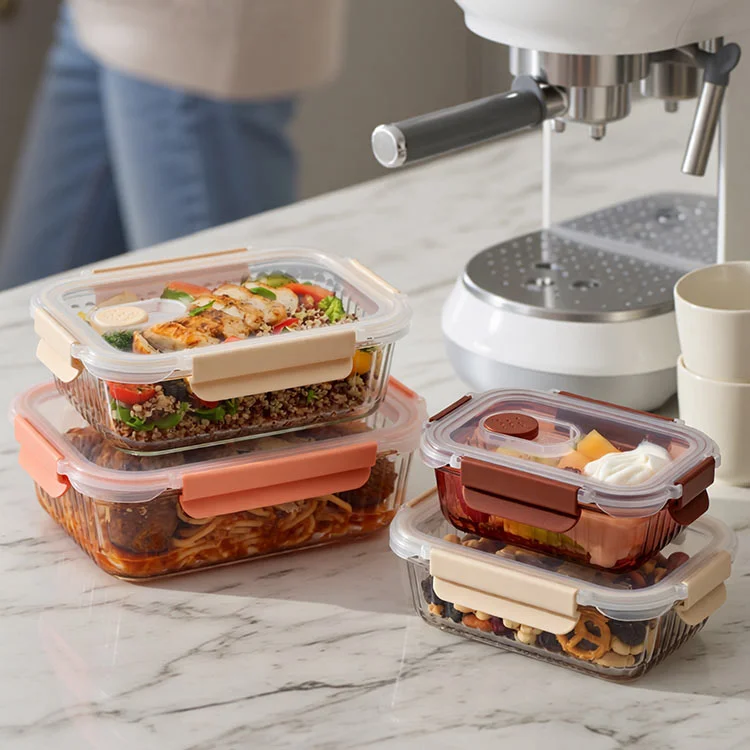
Glass food containers have become a popular choice for food storage, meal preparation, and kitchen organization. They offer clear visibility, easy cleaning, and reusable designs that suit both household kitchens and commercial food businesses. However, not all glass food containers serve the same purpose. Their shape, capacity, lid design, and glass material can affect how well they perform in different storage environments.
Understanding the main types of glass food containers helps consumers choose practical products and enables retailers, distributors, and food brands to build a product range that meets market demand.
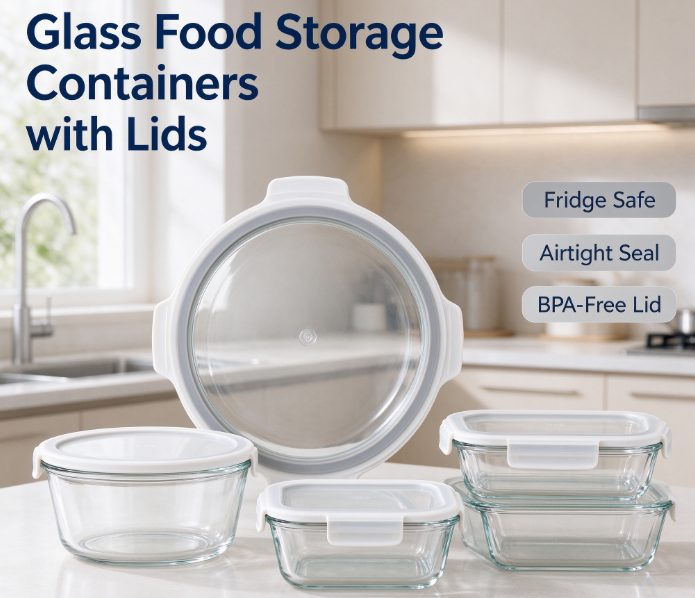
1. Glass Food Storage Containers with Lids
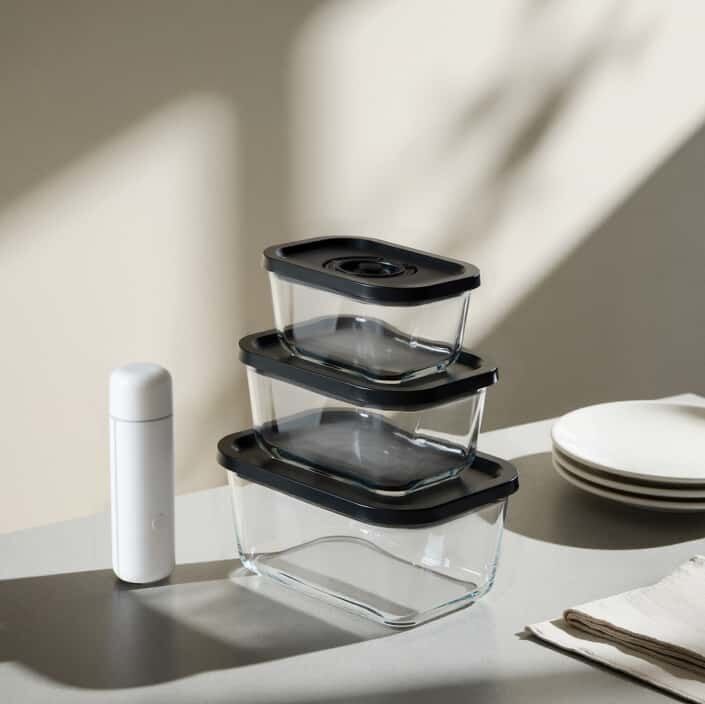
Glass food storage containers with lids are among the most versatile options for everyday use. They are suitable for storing cooked meals, leftovers, fresh ingredients, and prepared dishes in refrigerators or kitchen cabinets.
The container body is typically made from food-contact glass, while the lid may use plastic, silicone, glass, or other suitable materials. Airtight designs with silicone seals help reduce air exposure and prevent spills when properly closed. Transparent glass also makes it easier to identify stored food without opening the container.
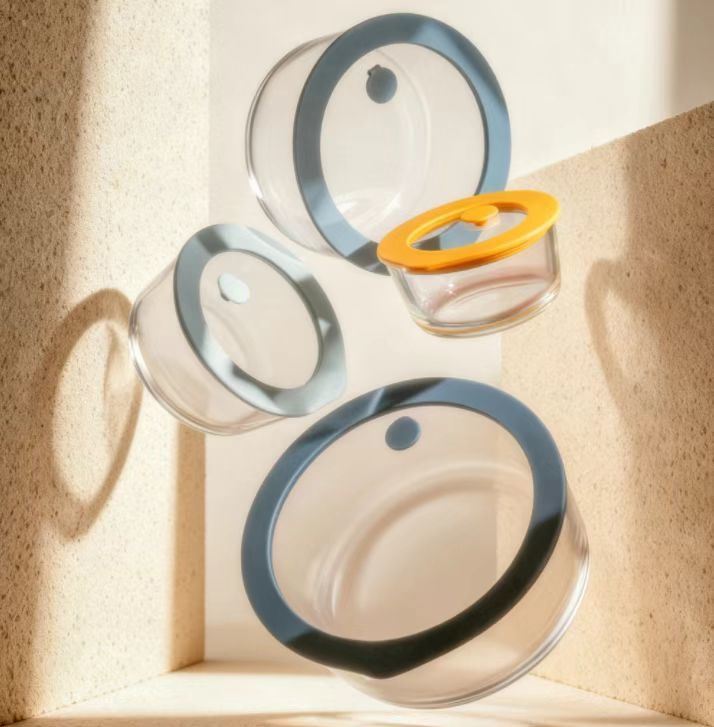
These containers are available in round, square, and rectangular shapes, with capacities ranging from small snack portions to large family meals. Stackable designs are especially useful for kitchens with limited storage space.
For retailers and food storage brands, this category offers broad appeal because it meets several everyday needs. Buyers should compare sealing performance, lid durability, available sizes, and cleaning requirements before selecting a product.
2. Glass Meal Prep Containers
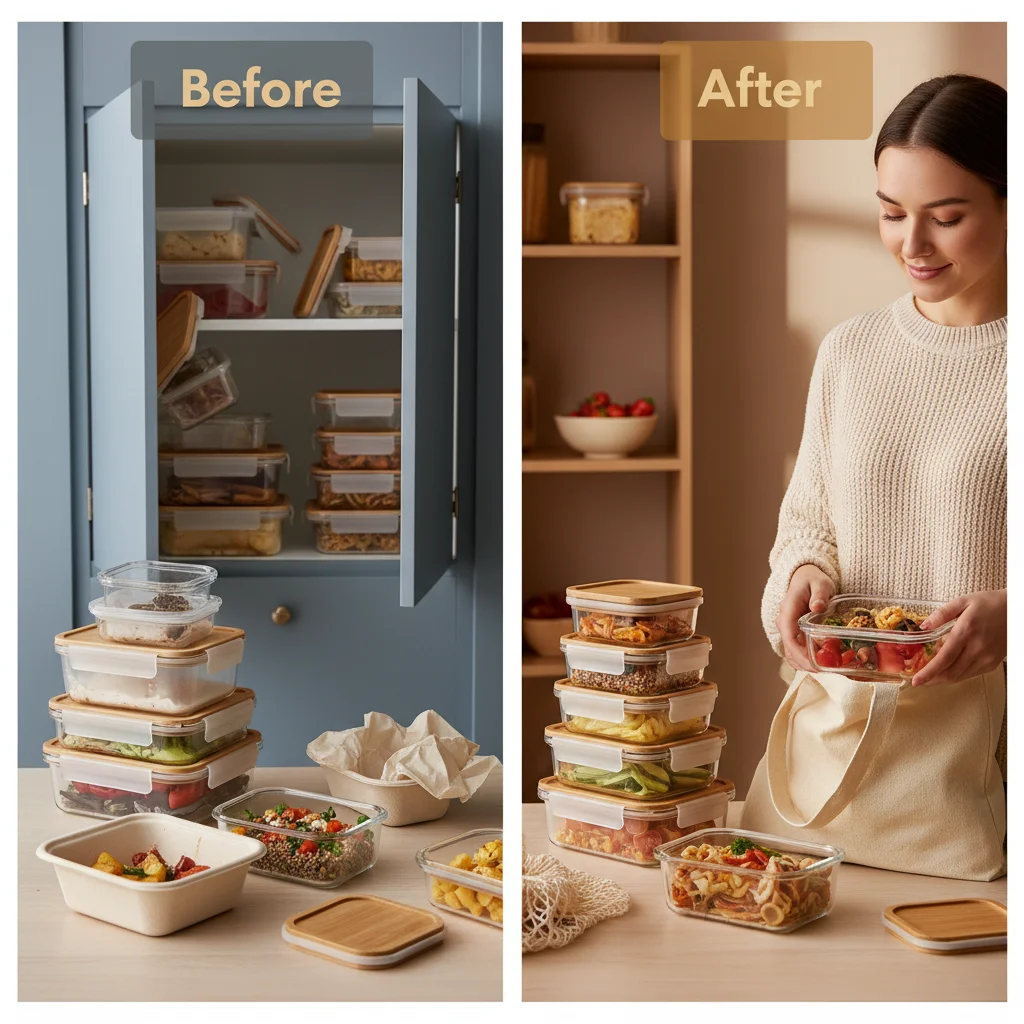
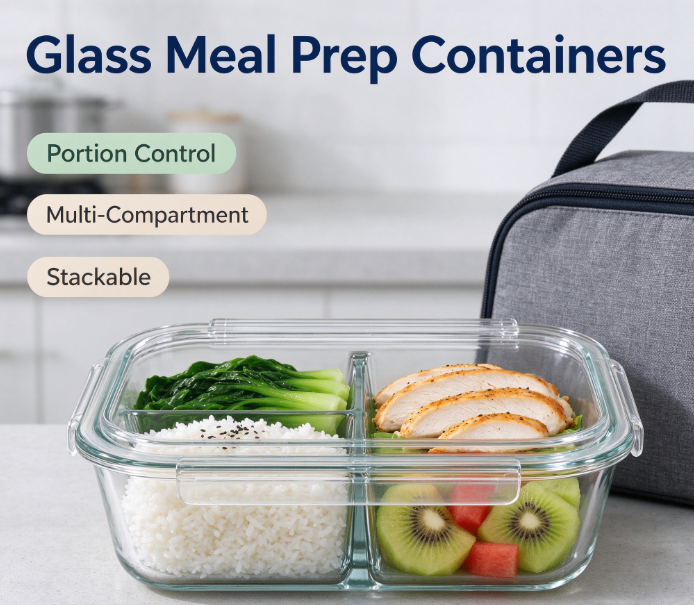
Glass meal prep containers are designed for portioning meals in advance. They are widely used by people who prepare lunches for work, organize weekly meals, or follow consistent portion sizes.
Rectangular containers are particularly practical because they fit neatly into refrigerators and lunch bags. Some models feature multiple compartments that separate vegetables, grains, meat, or other ingredients. This layout helps maintain the presentation of prepared meals and keeps different foods organized.
Borosilicate glass is a common option for products designed to handle temperature changes, although actual heat resistance depends on the product's specifications and construction. A secure lid is also important when meals need to travel between home, work, or school.
For commercial buyers, glass meal prep containers can be offered in coordinated sets with different capacities. Matching sizes, stackable structures, and easy-to-clean designs can make a product line more attractive to consumers who value convenience and organized food preparation.
3. Airtight Glass Food Containers
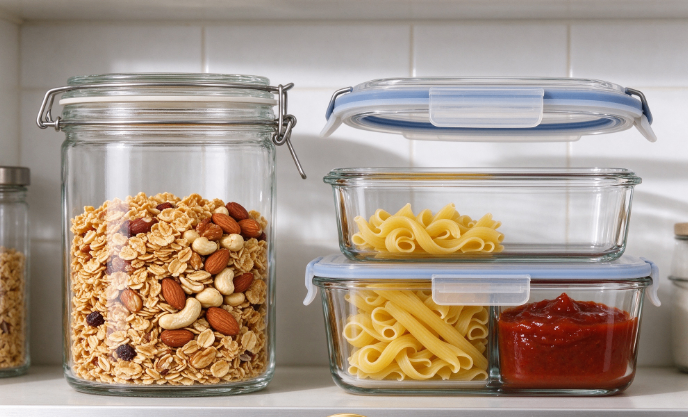
Airtight glass food containers are designed to limit exposure to air and moisture. They are useful for storing dry ingredients, snacks, leftovers, and certain prepared foods that benefit from a well-sealed environment.
Common applications include storing cereal, nuts, dried fruit, pasta, coffee, sauces, and refrigerated meals. Depending on the closure design, these containers may use screw-on lids, snap-lock lids, silicone gaskets, or other sealing systems.
The lid is a key performance factor. A container made from high-quality glass will not provide effective airtight storage if its closure fits poorly or its seal becomes damaged. Buyers should therefore assess the complete container-and-lid system rather than the glass body alone.
Airtight designs are particularly relevant to kitchenware retailers, supermarkets, and private-label brands. Different shapes and capacities can serve pantry organization, refrigerator storage, and meal preparation markets.
It is also important to understand that an airtight container does not automatically preserve every food indefinitely. Storage temperature, moisture levels, food condition, and handling practices remain essential.
4. Borosilicate Glass Food Containers
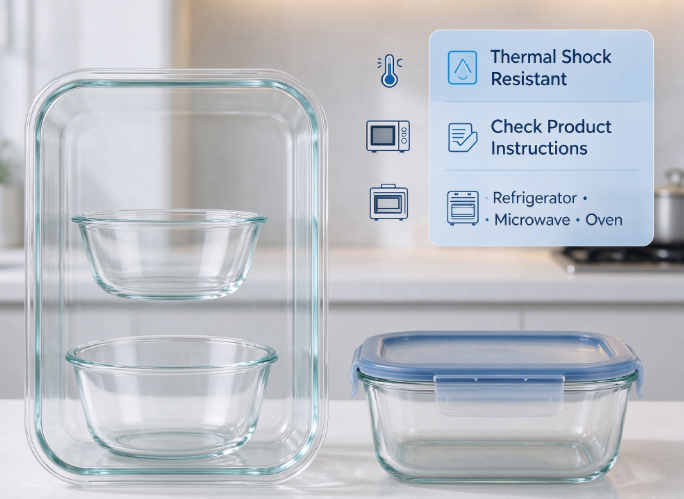
Borosilicate glass food containers are valued for their resistance to thermal shock compared with ordinary soda-lime glass. This makes them an attractive choice for applications involving temperature changes, provided the finished product is specifically designed and tested for the intended use.
Depending on the manufacturer's specifications, borosilicate containers may be suitable for refrigerator storage, microwave reheating, freezer storage, or oven use. However, these capabilities should never be assumed without checking the product instructions.
Borosilicate glass is available in multiple container styles, including rectangular food storage boxes, round containers, glass bowls, and lidded meal prep sets.
For buyers sourcing glass food containers wholesale, material selection should reflect the product's target market and expected use. Premium kitchenware brands may prioritize thermal performance, while value-focused product ranges may emphasize everyday storage and affordability.
When comparing suppliers, request information about glass composition, temperature limits, quality inspection procedures, and applicable food-contact requirements. These details provide a stronger basis for product selection than material names alone.
5. Glass Lunch Containers
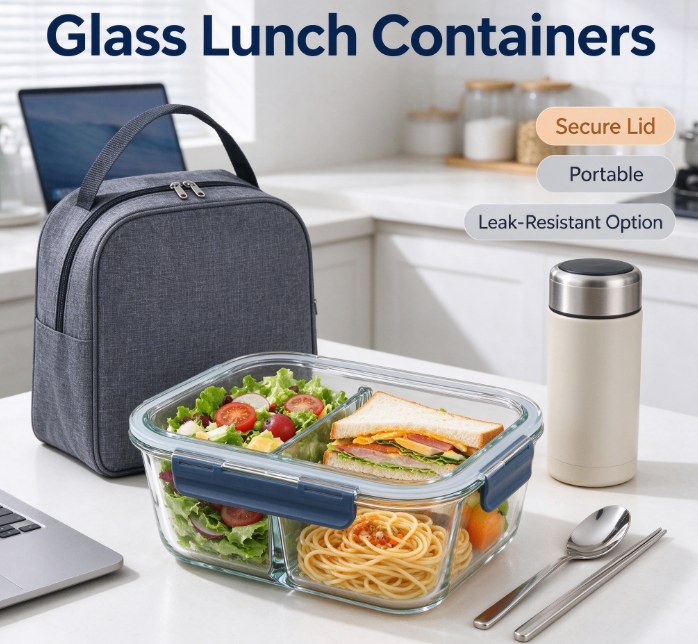
Glass lunch containers are designed for carrying prepared meals outside the home. Their practical features often include compact dimensions, secure lids, and shapes that fit into lunch bags or workplace refrigerators.
Some models use single compartments for rice dishes, salads, sandwiches, or pasta. Others include divided sections for keeping ingredients separate. Smaller containers can also accommodate fruit, snacks, sauces, and side dishes.
Weight is an important consideration because glass is generally heavier than comparable plastic materials. Buyers should evaluate container dimensions, wall thickness, lid security, and portability when choosing products for daily transportation.
For brands serving office workers, students, and meal-preparation enthusiasts, lunch containers can complement larger refrigerator storage products. Offering several sizes and coordinated designs can help customers select containers for different meals.
A leak-resistant lid is particularly important for transporting moist foods. Nevertheless, users should verify whether a container is suitable for liquids before carrying soups, dressings, or sauces in a bag.
6. Glass Storage Jars for Dry Foods
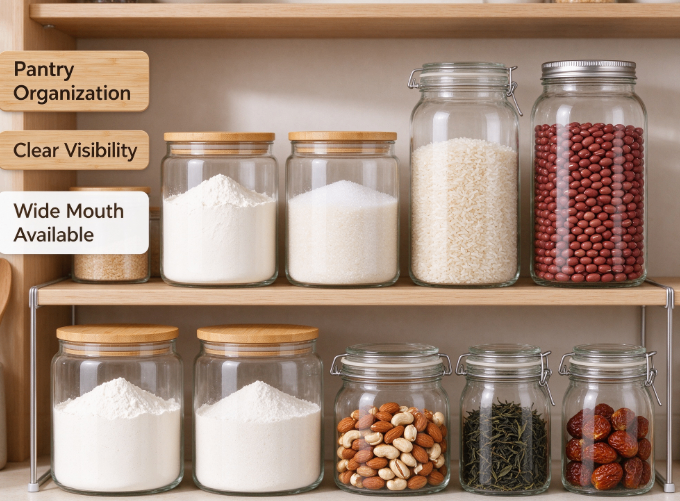
Glass storage jars are a practical option for pantry organization and the storage of dry ingredients. Their transparent bodies allow users to see the contents and remaining quantity, while their shapes make them suitable for shelves, countertops, and organized kitchen storage.
Typical applications include flour, sugar, rice, beans, spices, nuts, tea, and dried fruit. Wide-mouth openings make filling and cleaning easier, while narrower openings may suit ingredients dispensed in smaller quantities.
Lid options include screw caps, clamp closures, bamboo lids, and other designs. The best choice depends on the intended food, storage conditions, and desired appearance. For example, a jar intended for dry pantry ingredients may have different sealing requirements from one designed for frequently opened snacks.
For kitchenware manufacturers and private-label buyers, glass storage jars offer opportunities to differentiate products through capacity, shape, lid material, surface decoration, and packaging. Consistent dimensions and coordinated collections can also support attractive retail displays.
7. Stackable and Space-Saving Glass Containers
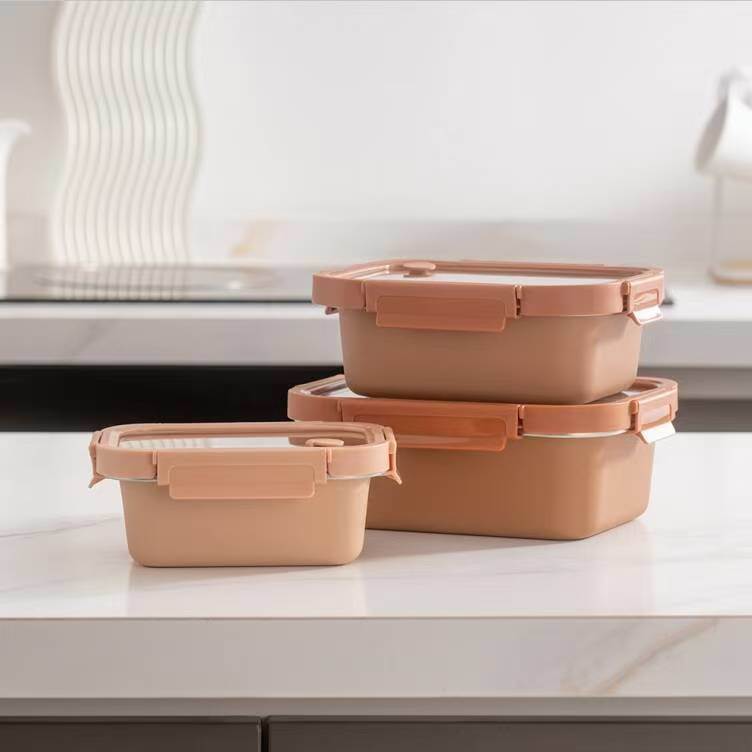
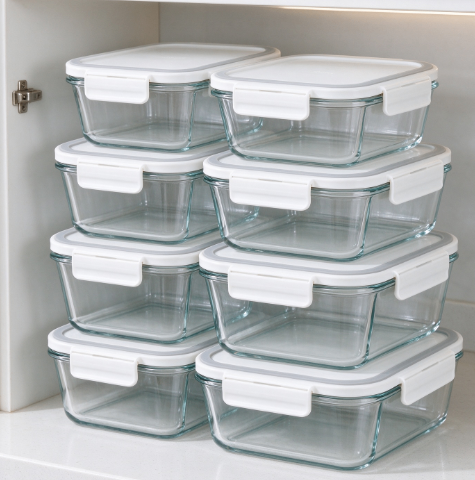
Stackable glass food containers help make better use of refrigerator shelves, kitchen cabinets, and storage areas. Their uniform shapes allow multiple containers to fit together more efficiently than mismatched bowls and boxes.
Square and rectangular designs are especially useful for maximizing shelf space. Some products also feature nesting structures, allowing empty containers to be stored inside one another when not in use.
These containers work well for households that prepare meals in batches, as well as restaurants and catering operations that need organized food storage. Matching lids can further simplify storage and reduce the inconvenience of searching for compatible pieces.
When evaluating stackable glass containers, buyers should consider base stability, lid design, overall dimensions, and whether filled containers remain secure when stacked. The glass body must also be handled carefully because stacking convenience does not eliminate the risk of chips or breakage.
For wholesale purchasers, standardized sizes and coordinated product sets can help simplify inventory management while offering consumers more flexible storage combinations.
How to Choose the Right Type of Glass Food Container
Selecting the right glass food container starts with its intended application. A useful comparison is shown below.
| Container type | Main application | Key feature to consider |
|---|---|---|
| Glass storage containers with lids | Leftovers and everyday food storage | Lid fit and capacity |
| Glass meal prep containers | Batch cooking and portioning | Compartments and stackability |
| Airtight glass containers | Foods requiring reduced air exposure | Seal performance |
| Borosilicate glass containers | Applications involving temperature changes | Verified thermal limits |
| Glass lunch containers | Meals on the go | Portability and leak resistance |
| Glass storage jars | Pantry ingredients and dry foods | Opening size and closure |
| Stackable glass containers | Space-efficient storage | Shape consistency and stability |
Before purchasing, check the glass material, container dimensions, lid composition, cleaning instructions, and intended temperature range. Avoid exposing glass to sudden temperature changes unless the manufacturer explicitly confirms that the product is suitable for the intended conditions.
For commercial sourcing, additional considerations include minimum order quantities, sample availability, packaging options, customization capabilities, production capacity, and quality control.
Why Choose Ikoo Glass Food Containers?
For retailers, importers, distributors, and kitchenware brands, choosing the right product range involves more than comparing container shapes. Material specifications, lid performance, product consistency, and packaging all influence the final purchasing decision.
Ikoo Glass provides a relevant starting point for exploring wholesale glass food container options. Buyers can compare available designs and identify products that fit their target markets, from everyday food storage to meal preparation and organized kitchen storage.
When developing a private-label or wholesale collection, consider whether you need different capacities, coordinated sets, customized packaging, or specific lid configurations. Confirm the availability and technical specifications of each option directly with the supplier before finalizing an order.
Explore Ikoo Glass's glass food storage container collection to evaluate suitable products for your business and discuss your sourcing requirements.
Frequently Asked Questions
What are the main types of glass food containers?
The main types include glass food storage containers with lids, meal prep containers, airtight containers, borosilicate glass containers, lunch containers, storage jars, and stackable containers. Each type serves different storage and transportation needs.
Is borosilicate glass better for food storage?
Borosilicate glass generally offers better thermal shock resistance than ordinary soda-lime glass. It can be a good choice for applications involving temperature changes, but the safe operating range depends on the specific product and manufacturer instructions.
Are glass food containers with lids airtight?
Some are designed to provide an airtight seal, while others use simple covers intended mainly to protect food. Check the lid design and sealing specifications before purchasing.
What should wholesale buyers look for in glass food containers?
Wholesale buyers should evaluate material quality, capacity, dimensions, lid performance, packaging, customization options, minimum order quantities, and supplier quality control. Samples and documented specifications can help confirm product suitability before bulk purchasing.
Can glass food containers be customized?
Customization possibilities may include container shape, capacity, lid style, surface decoration, branding, and retail packaging. Available options depend on the manufacturer's capabilities, tooling requirements, and order quantity.